The pitch
If you know Huck from films or cartoons, the book will surprise you. It is set in the
slaveholding Mississippi valley of the 1840s. Huck escapes his violent, drunken father
by faking his own murder and hides on Jackson’s Island, where he finds Jim, Miss
Watson’s slave, who has run away rather than be sold down the river to New Orleans. They
float south together on a raft, through fog and past wrecks and feuding families, and
fall in with two con men calling themselves a duke and a king. All the way down, Huck
believes that helping his friend is a sin, and helps him anyway.
What changed, exactly
The slur appears 212 times in what Twain wrote. In 205 of them it is replaced with
“slave”, which is the conventional substitution and the one the 2011 NewSouth edition
used. The remaining seven are replaced with “black man”, because “slave” would make
nonsense of them: six occur in Pap’s drunken rant in chapter six, which is entirely
about a free Black college professor from Ohio who votes and whom the law will not
let anyone sell — the outrage Pap is expressing depends on the man being free. The
seventh is the last chapter’s line about Tom taking all that trouble to set a free
man free. Nothing else in the text is altered: not the violence, not the dialect,
not Twain’s own front matter, not a comma of anyone’s speech.
We think you should know this is an edit, and we’d rather say so plainly than let a
reader assume they are holding what Twain published. It is a legitimate edition and a
contested one, and both of those things are worth telling a young reader.
What to know
At about 110,000 words in 43 chapters, this is a long book and one of the hardest on our
shelf. Readers in grades nine to twelve can read it alone, and it reads aloud from about
age eleven or twelve. The whole story is in Huck’s own grammar, and Twain’s note at the
front says he used several dialects on purpose. They take a chapter or two to settle
into, and reading a page aloud often unlocks them.
Huck believes throughout that helping Jim is a crime and a sin. A drunk man is shot dead
in the street by a colonel he insulted, and a family feud kills two boys, one of them
Huck’s friend Buck. In the last chapters Tom Sawyer stages an elaborate escape for Jim,
though Tom knows Jim has already been freed in Miss Watson’s will.
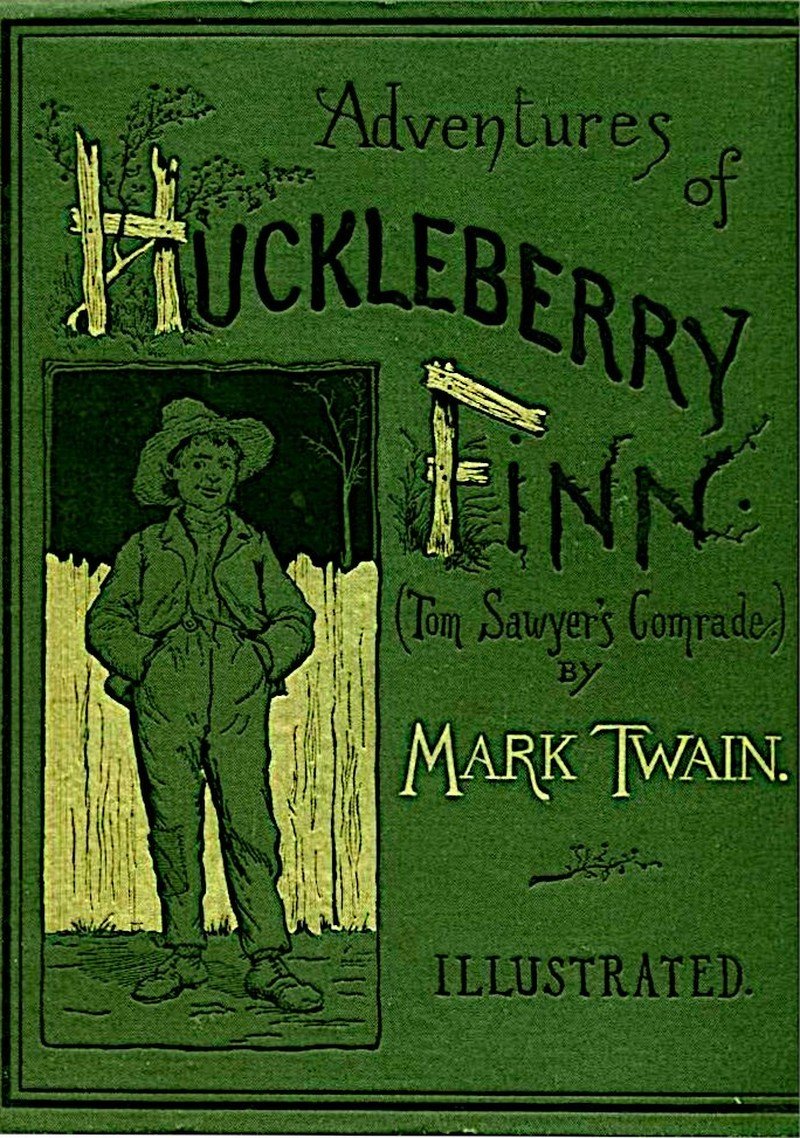
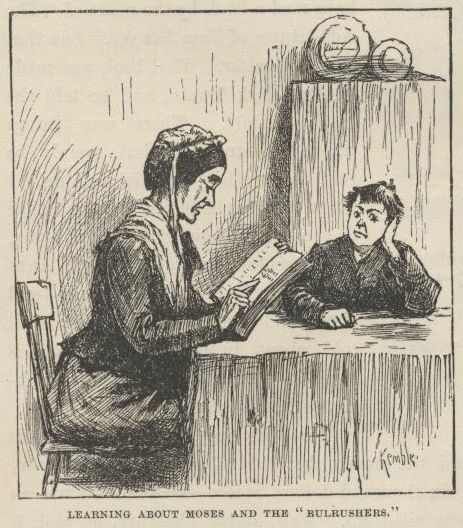
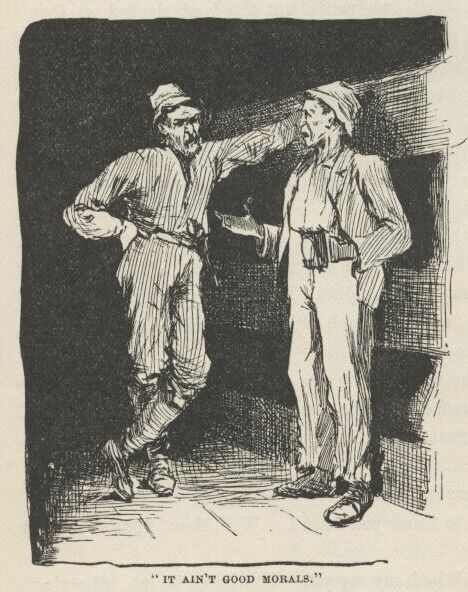
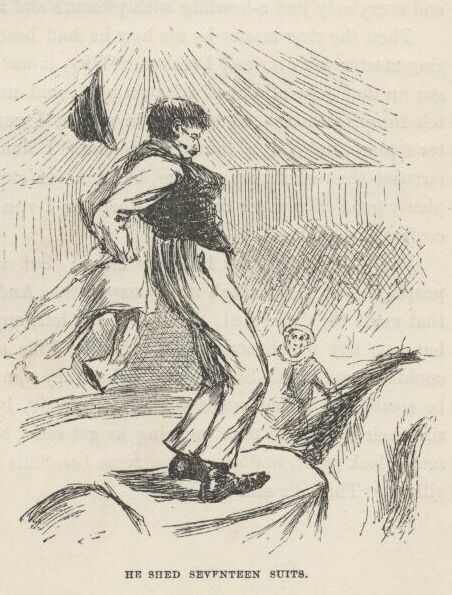
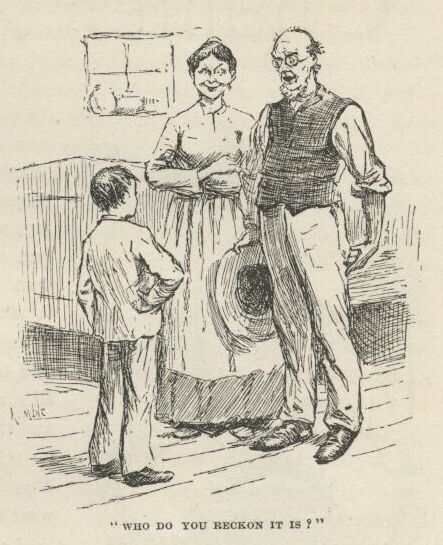
This edition has all 174 of E. W. Kemble’s illustrations, with the racial slur replaced
and nothing else changed. The book club
questions and book vs. movie
page apply to it unchanged. The
audiobook and paperback linked above are the unaltered text, because no censored audio
or print edition exists.
Life when written
Mark Twain was born Samuel Clemens in 1835 and grew up in Hannibal, Missouri, a slave
state, on the Mississippi. As a young man he trained and worked as a steamboat pilot on
the river until the Civil War.
He began Huckleberry Finn in 1876, after finishing The Adventures of Tom Sawyer, then
put it aside for years. In 1882 he travelled the Mississippi again, writing Life on the
Mississippi (1883), and went back to Huck. The book came out in Britain in December 1884
and in America in February 1885, published by Twain’s own firm, Charles L. Webster and
Company. In March 1885 the public library in Concord, Massachusetts, banned it as coarse
and unsuitable. Twain had already warned readers in his Notice at the front: “persons
attempting to find a moral in it will be banished; persons attempting to find a plot in
it will be shot.”