01
Words invented for the mouth
The great grey-green greasy Limpopo River, a man of infinite-resource-and-sagacity, a 'satiable curtiosity. These sentences were built to be said, and kids start saying them back within a day.
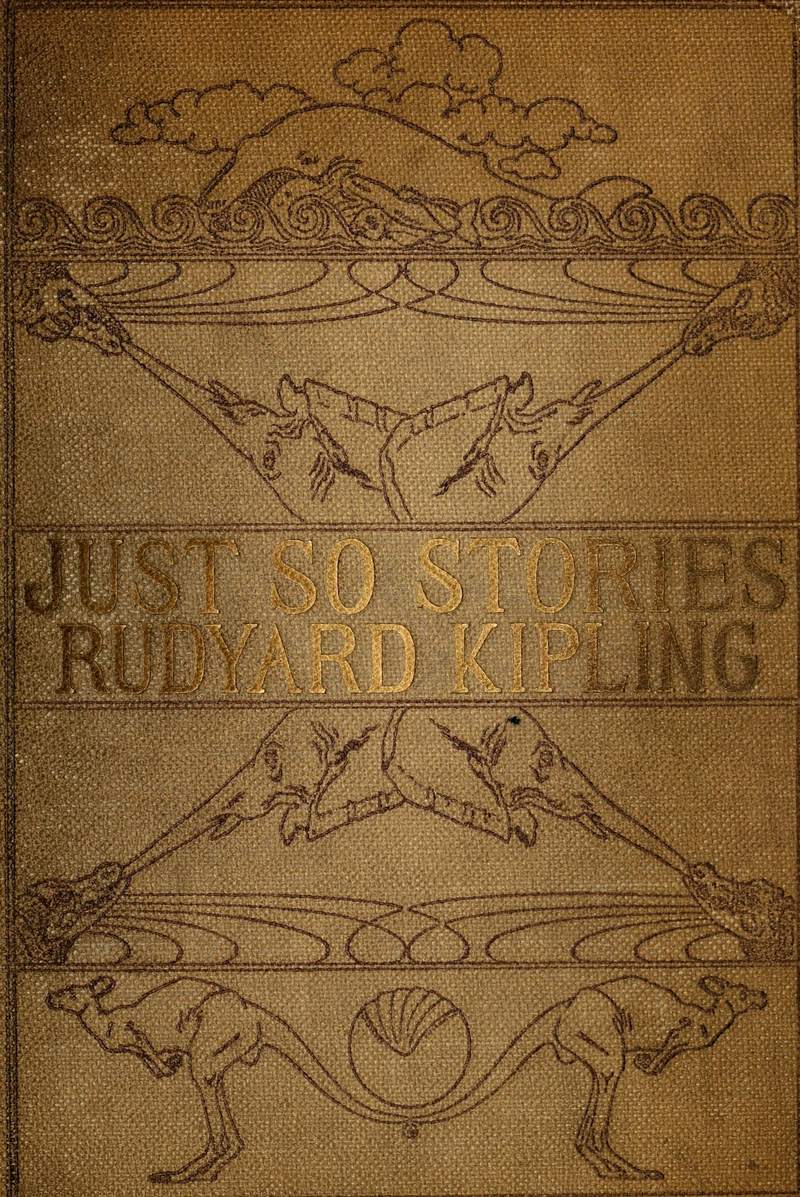
Twelve tall tales about how the animals got the way they are, written to be said out loud by a father who told them to one small girl until she knew every word.
EPUB works on any device · two-minute setup guide → ·listening, print & film links go to Amazon (affiliate)
The great grey-green greasy Limpopo River, a man of infinite-resource-and-sagacity, a 'satiable curtiosity. These sentences were built to be said, and kids start saying them back within a day.
Under each of his own drawings he writes a paragraph telling you what everything in it is — the Whale's name was Smiler, the Mariner was Mr. Henry Albert Bivvens, A.B. Half the jokes are down there.
Why does the camel have a hump, why is the leopard spotty, where did the alphabet come from. These are the answers a very confident grown-up would make up on the spot.
Why does the camel have a hump, how did the leopard get spotty, and what happened to the elephant’s nose on the banks of the great grey-green greasy Limpopo River? Twelve tall tales that answer questions no one can answer, told by a father who is absolutely certain of every word, to a child he keeps calling Best Beloved. The sentences are built out loud — long, rolling, stuffed with invented words — and they are almost impossible to read silently.
This is the most read-aloud-shaped book on our shelf: each tale runs ten to twenty minutes, they are in no particular order, and a four-year-old can follow one while the grade 2–5 band is for reading them alone. The reading measure looks alarming next to that — Accelerated Reader puts the unabridged text at a 6.4 book level — and the NC on its Lexile is the official way of saying the same thing: hard sentences, small audience, on purpose.
Our edition is the 1912 Doubleday, Page printing, and it carries three things at once. Kipling’s own drawings, because he illustrated this book himself. Under each one, his own long caption, which is where a good deal of the comedy lives and which almost no free ebook of this book has, because they have no pictures to hang it on — that is roughly five thousand words of Kipling that go missing elsewhere. And on top of those, Joseph Gleeson’s twelve colour plates, one facing each story. The thirty-three alphabet figures in “How the Alphabet Was Made” are here too; without them that story cannot be read at all. What is not here is “The Tabu Tale,” a thirteenth story Kipling added for one American printing in 1903 and which most editions, including this one, have never carried.
Kipling invented the first three of these at bedtime in Vermont, in the house he built outside Brattleboro in the 1890s, for his eldest daughter Josephine. She required them told exactly the same way every time — just so — and would object to any word that moved, which is where the book’s name comes from. The family left Vermont in 1896 for Sussex, and in the winter of 1899, on a crossing to New York, Kipling and both daughters caught influenza; his turned to pneumonia and nearly killed him, and Josephine’s did kill her. She was six. He finished the book without her and published it in 1902, and left in every “O Best Beloved” on every page.
Modern books (still in copyright, so not free) that scratch the same itch.
For the kid who started repeating 'infinite-resource-and-sagacity' — Dahl builds a whole language the same way, and it lands at the same age and the same volume.
A novel that keeps stopping to tell you a folktale about where something came from — the Just So engine, running inside a story with a plot.
Affiliate links. They never affect our picks.
Prefer a printed copy? Puffin Classics paperback (affiliate links). Not sure whether your reader needs the original or an abridged edition? Our guide to choosing →
Send the free EPUB to your Kindle with Amazon's free Send to Kindle — it appears in the library like any book.
Opens straight in Apple Books. Tap the file, choose Books, done — great for bedtime read-alouds.
Google Play Books opens it in a couple of taps, and syncs your place across devices.
Apple Books on a Mac, or the free Calibre app on Windows. No account needed.
We shelve it for grades 2–5 — that's where the language and the length sit for a reader on their own. Read aloud, it works earlier, from about age 4–5 — kids follow a story by ear well before they can read it alone.
The unabridged text measures NC1060L Lexile, AR level 6.4 (5 points). (NC means the sentences measure far above the age the book is written for — a book meant to be read aloud to small children in a grown-up's voice.) In everyday terms: grades 2–5, and easier as a read-aloud.
Barely — the Crocodile has the Elephant's Child by the nose. The racial slur appears twice, both inside "How the Leopard Got His Spots" and nowhere else in the book: once in the Ethiopian's own mouth, about himself, in the story's last exchange, and once in Kipling's caption to his own drawing of that story, which also says the Ethiopian "was really a negro, and so his name was Sambo." No other tale carries it. "The Elephant's Child" is built on spanking — every relative spanks him for asking questions, twenty-five times in nine pages, until he comes back with a trunk and spanks them all, after which "nobody spanked anybody any more"; the Crocodile has him by the nose for several pages. In "How the First Letter Was Written" a village misreads a drawing and mobs an innocent stranger — six women sit on him, one pulls his hair, they fill it with mud. "The Butterfly That Stamped" turns on Suleiman-bin-Daoud's nine hundred and ninety-nine quarrelsome wives.
Yes — the complete, unabridged text, with the original Rudyard Kipling and Joseph M. Gleeson illustrations. Just So Stories was published in 1902, so it's in the US public domain: sharing it free is legal, and there's no signup or catch. We build the ebook ourselves from the original edition.