The pitch
If you only know the films, the book will surprise you. Kipling’s Jungle Book is seven
separate stories, richer and fiercer than the cartoon. In the three Mowgli stories, “a
naked brown baby who could just walk” toddles into a wolf’s cave, is raised by the
wolves, taught by stern old Baloo and the black panther Bagheera, and hunted by the lame
tiger Shere Khan, until he finds he belongs fully to neither the jungle nor the village
of men. The other four stories travel from the seal beaches of the Bering Sea to an
Indian garden, an elephant camp, and an army parade ground.
What to know
At about 52,100 words in seven stories, The Jungle Book reads aloud well from about age
six or seven, a story or two at a time, and suits readers in grades 4 to 7 on their own.
Kipling’s vocabulary is rich, with some Hindi words, which he usually explains right
there in the sentence.
The animal world is wild and unsentimental. Shere Khan means to kill Mowgli, and is
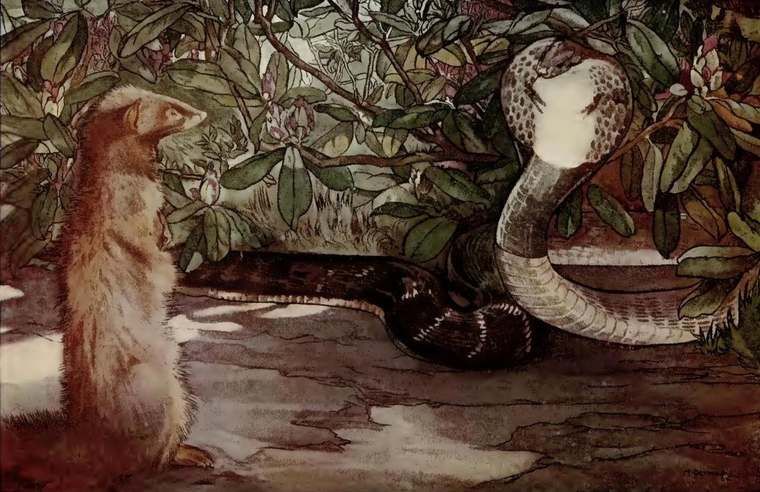
trampled to death by buffalo in “Tiger! Tiger!”; Rikki-tikki’s fight with the cobras is
to the death; seal-hunters club the young seals in “The White Seal”; and animals kill
and are killed throughout. Kipling’s 1894 colonial outlook shows at the edges, most of
all in the last story, about the animals of a British army camp.
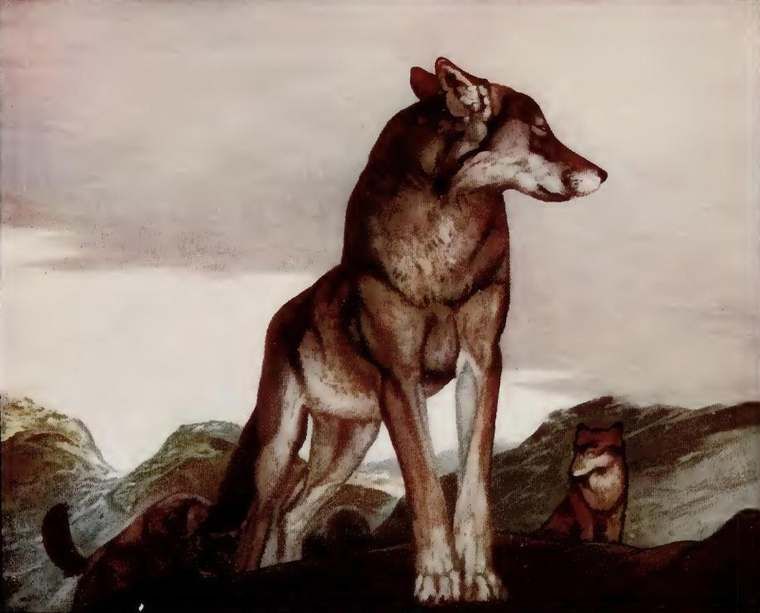
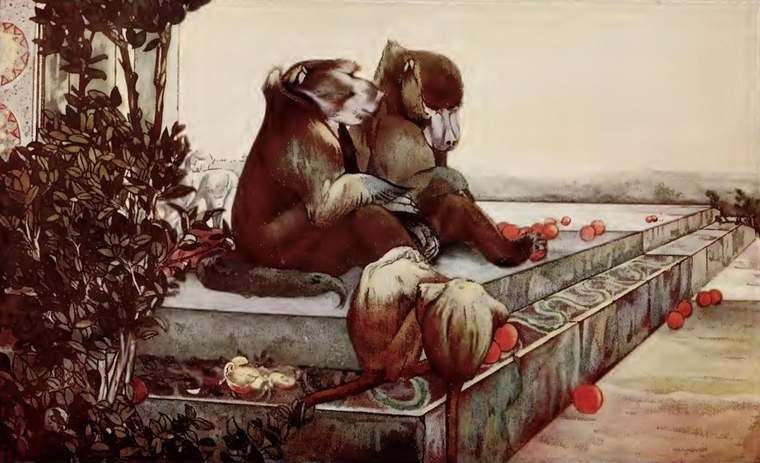
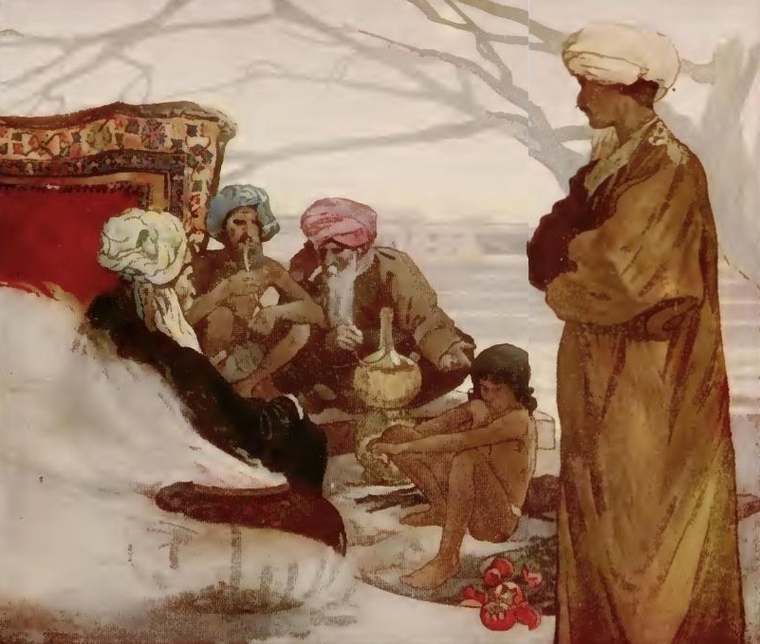
Our edition has the complete 1894 text, all seven stories with the song that follows
each, and 53 pictures: black-and-white drawings by John Lockwood Kipling, W. H. Drake
and P. Frenzeny, the artists of the first edition, and 16 color plates by the twin
brothers Maurice and Edward Detmold, first published in 1903.
Life when written
Rudyard Kipling was born in Bombay in 1865. When he was five, he and his younger sister
were sent to England to board with a family in Southsea, where he was miserable for
nearly six years. His father, John Lockwood Kipling, was an artist and museum curator in
Lahore, and at sixteen Kipling went back to India to work on a newspaper there. His
father later drew some of the pictures for the first edition of this book.
In 1892 Kipling married Caroline Balestier, and they settled near her family in
Brattleboro, Vermont. That winter, in a rented cottage there, he began The Jungle Book,
and he wrote most of the rest at Naulakha, the house they built. As he remembered it,
“the pen took charge, and I watched it begin to write stories about Mowgli and animals.”
The stories ran in magazines in 1893 and 1894, and the book came out in 1894, with The
Second Jungle Book a year later. In 1907 Kipling won the Nobel Prize in Literature.