The pitch
The meanest man in London is visited on Christmas Eve by his dead business partner
and three spirits, shown his own past, present and future in a single night, and
walks out the other side a different man. Dickens called it “A Ghost Story of
Christmas” and built the whole modern idea of the holiday — the goose, the carols,
the second chances — in five short staves.
What to know
It is short — about 28,500 words, five staves, finishable in a week of evenings or
one long snowy afternoon — but the sentences are 1843: long, musical, and stuffed
with jokes a grade-5 reader may ride past. That combination makes it a classic
family read-aloud, and it was built for the voice — Dickens himself performed it on
stage for twenty years, doing all the parts. The scares are real but engineered to
resolve: every dark thing the spirits show is reversed in the final stave. The
darkest stretch is Stave Four (a plundered corpse, a child’s death, Scrooge’s own
grave — details in the content note), and it lasts about fifteen pages before the
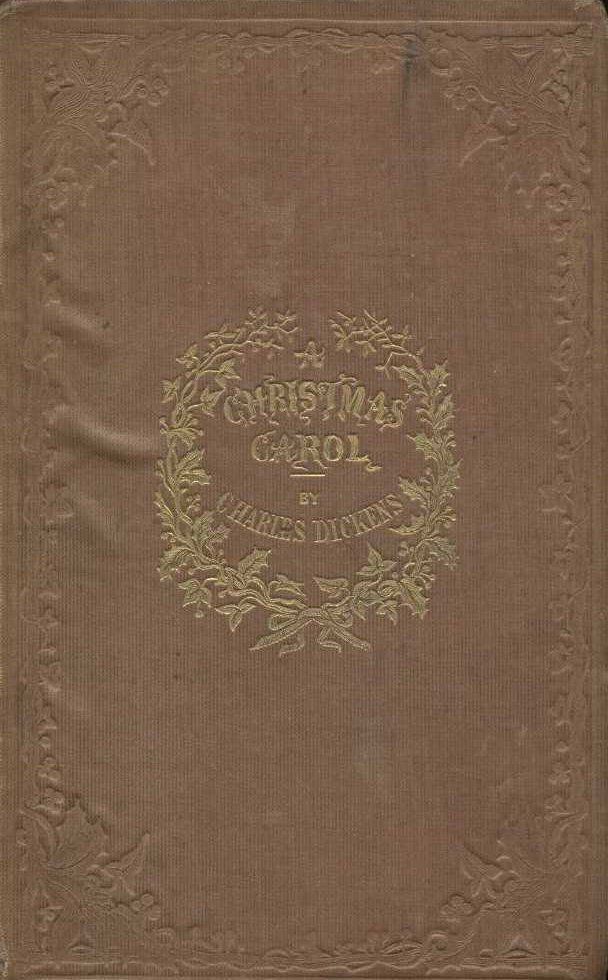
sun comes up. This edition is the 1843 first edition complete with Dickens’s
preface and all eight of John Leech’s original illustrations, four of them the
famous hand-coloured etchings — Marley’s ghost, Fezziwig’s ball, the Ghost of
Christmas Present on his throne of food.
Life when written
Dickens wrote it in six weeks, October to November 1843, at thirty-one — money
tight, his serial Martin Chuzzlewit underselling, a fifth child on the way. That
autumn he had visited a Ragged School for London’s street children and spoken in
Manchester on education and the poor, and the book was his answer: he said he wept
and laughed over it, and walked fifteen and twenty miles through the black London
streets at night while the rest of the city slept, composing it in his head. He
paid for the printing himself and priced it low at five shillings so ordinary
families could afford it — red cloth, gilt edges, hand-coloured plates — and it
sold out its six thousand copies by Christmas Eve. The lavish production ate
nearly all his profit, which is a fact he would have appreciated the irony of:
the book about generosity barely paid its author.