HomeAll booksThe Happy Prince and Other Tales
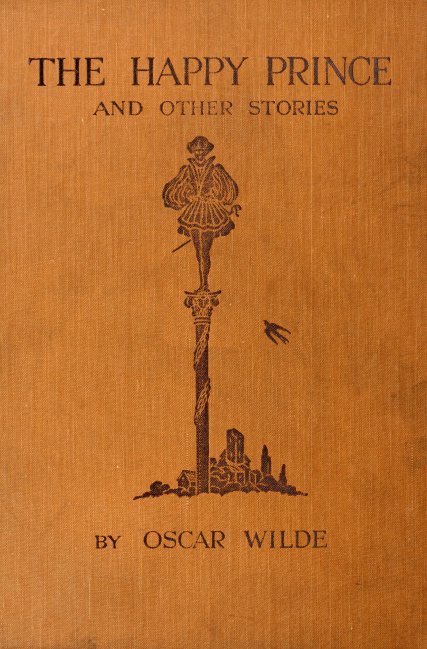
The Happy Prince and Other Tales cover
Fairy tales

The Happy Prince and Other Tales

Oscar Wilde · first published 1888

Five fairy tales Wilde made up for his own sons — a gilded statue who gives himself away piece by piece, a swallow who stays past summer — jeweled, funny, and unafraid of sad endings.

Free EPUB & KindleGrades 4–7Original Charles Robinson (the 1913 edition — twelve colour plates plus his line vignettes and decorated initials) artBest read by a parent
None — sad, not scary ⓘ
Worth knowing: Every tale but one ends in a death or a loss, told beautifully and without cruelty. In 'The Happy Prince' the Swallow stays through the frost and dies at the statue's feet, and the Prince's lead heart cracks in two; God then sends an angel to carry the heart and the dead bird to Paradise. In 'The Nightingale and the Rose' the Nightingale sings all night with a thorn against her heart to redden a rose, dies making it, and the student throws the rose into the gutter. In 'The Selfish Giant' the Giant is found dead under the tree one winter morning, covered in white blossoms, after a child bearing nail wounds in his hands and feet — the Christ-child — comes to take him to his garden of Paradise. In 'The Devoted Friend' little Hans drowns in the marsh on a night errand for the Miller, who feels hard done by at the funeral. 'The Remarkable Rocket' is the comedy of the set; its hero merely fizzles unnoticed. Christian imagery is open and warm throughout — God, an angel, Paradise. Victorian poverty is shown plainly: a seamstress with a fevered boy, a starving playwright, a little match-girl whose matches spill in the gutter.

EPUB works on any device · two-minute setup guide → ·listening & print links go to Amazon (affiliate)

Why your kid will love it

01

It trusts kids with real endings

The Swallow stays one night too many, the Nightingale pays full price for her rose, and the story never pretends otherwise. Kids know when a book is leveling with them, and these are the sad endings they bring up years later, still thinking.

02

The funny ones are properly funny

A firework so conceited he weeps himself too soggy to light, a Miller with magnificent speeches about friendship and a wheelbarrow's worth of taking — Wilde's jokes work at age seven and keep working on the adult reading them out.

03

One tale, one bedtime

Each story is a single sitting — ten to twenty-five minutes aloud — with a complete world in it. Wilde told these aloud to his children before he wrote them down, and the sentences still carry that telling voice.

Reading it together?

Warm-ups, real questions, and something to do together. No worksheets.Book club questions →

The background for parents

The pitch

A gilded statue watches his city from a column, sees every sorrow in it, and gives himself away — sapphire eyes, gold leaf, ruby — through the beak of a swallow who keeps meaning to leave for Egypt. Around the title tale stand four more: a nightingale who buys a rose with her life, a giant who walls spring out of his garden, a devoted friend devoured by a talkative one, and one extremely conceited firework. Wilde made these up aloud for his own two boys, and they are the rare fairy tales that give the parent as much as the child.

What to know

Each tale is a self-contained sitting — ten to twenty-five minutes aloud — which makes this one of the most flexible read-alouds on our shelf, and the grade 4–7 band is for reading it alone: Wilde’s vocabulary is genuinely literary (Accelerated Reader puts the unabridged title story at a 6.9 book level), but the plots follow clean fairy-tale rails a six-year-old listener can ride. Know going in that these tales end sadly on purpose — the deaths are gentle, dignified, and real, and the content note locates every one — and that Wilde plays the sorrow against comedy kids reliably find hilarious. Our edition is the 1913 Charles Robinson printing: twelve colour plates with their printed legends, his pen-work in the margins, a decorated initial opening each tale, and his cherub cartouche carrying Wilde’s dedication to his friend Carlos Blacker.

Life when written

Wilde wrote these in London in the mid-1880s, in the house on Tite Street, Chelsea, where he was raising two small sons, Cyril and Vyvyan — he was editing a women’s magazine to pay the bills, and the great plays and scandals were still years ahead. The tales were told before they were written: he spun stories for his boys at bedtime, and his son Vyvyan remembered him in tears telling The Selfish Giant, saying that really beautiful things always made him cry. London outside the nursery window was exactly the city in the title story — grand squares within sight of seamstresses working by guttering candles and children sleeping under bridges — and Wilde put both halves on the same page and let his sons see them. Published in May 1888, the little book was his first real literary success.
The book vs. the movie

The only true film versions are two short television animations from the 1970s — and the 2018 film called The Happy Prince is a biography of Wilde for adults, not the fairy tale.How they differ →

If they like it, read these next

Modern books (still in copyright, so not free) that scratch the same itch.

For the kid who sat quiet after the Happy Prince gave away his sapphire eyes: a china rabbit who learns to love by losing everything, written with the same conviction that children can handle real sorrow in a beautiful container.

The Little Prince by Antoine de Saint-Exupéry

The other short book about a prince that adults press on children and children press back on adults — the same blend of fable, sadness, and jokes that mean more each year you reread it.

Affiliate links. They never affect our picks.

Prefer a printed copy? Macmillan Collector's Library clothbound (affiliate links). Not sure whether your reader needs the original or an abridged edition? Our guide to choosing →

Read it on any device

Quick answers

What age is The Happy Prince and Other Tales right for?

We shelve it for grades 4–7 — that's where the language and the length sit for a reader on their own. Read aloud, it works earlier, from about age 6–7 — kids follow a story by ear well before they can read it alone.

What reading level is The Happy Prince and Other Tales?

The unabridged text measures AR level 6.9 (1 point). In everyday terms: grades 4–7, and easier as a read-aloud.

Is The Happy Prince and Other Tales scary?

None — sad, not scary. Every tale but one ends in a death or a loss, told beautifully and without cruelty. In 'The Happy Prince' the Swallow stays through the frost and dies at the statue's feet, and the Prince's lead heart cracks in two; God then sends an angel to carry the heart and the dead bird to Paradise. In 'The Nightingale and the Rose' the Nightingale sings all night with a thorn against her heart to redden a rose, dies making it, and the student throws the rose into the gutter. In 'The Selfish Giant' the Giant is found dead under the tree one winter morning, covered in white blossoms, after a child bearing nail wounds in his hands and feet — the Christ-child — comes to take him to his garden of Paradise. In 'The Devoted Friend' little Hans drowns in the marsh on a night errand for the Miller, who feels hard done by at the funeral. 'The Remarkable Rocket' is the comedy of the set; its hero merely fizzles unnoticed. Christian imagery is open and warm throughout — God, an angel, Paradise. Victorian poverty is shown plainly: a seamstress with a fevered boy, a starving playwright, a little match-girl whose matches spill in the gutter.

Is the free ebook really the whole book?

Yes — the complete, unabridged text, with the original Charles Robinson (the 1913 edition — twelve colour plates plus his line vignettes and decorated initials) illustrations. The Happy Prince and Other Tales was published in 1888, so it's in the US public domain: sharing it free is legal, and there's no signup or catch. We build the ebook ourselves from the original edition.

More free classics like this