01
One sitting, one scare
The whole story runs about an hour. A kid can start it after dinner and be finished — and properly spooked — before bed, which is the entire appeal.
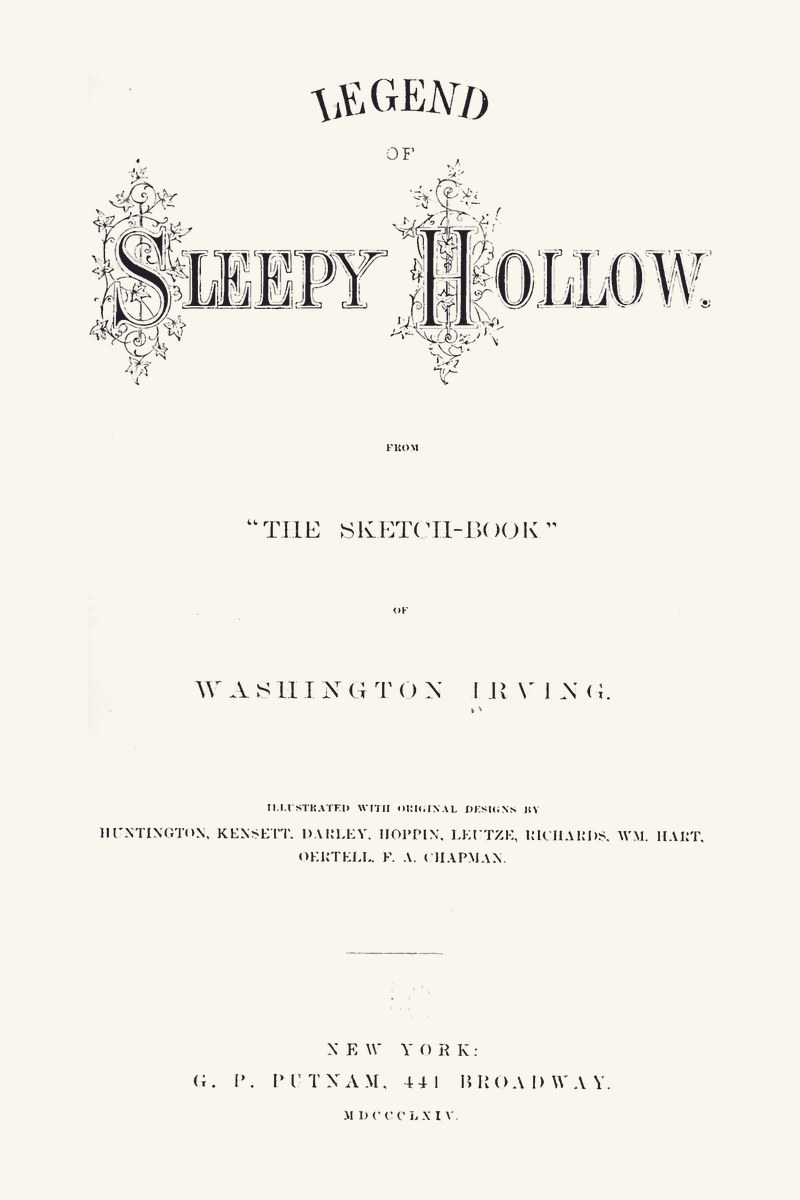
America's first ghost story, and it still lands: a hungry, superstitious schoolmaster rides home through the woods on the one night he shouldn't have.
EPUB works on any device · two-minute setup guide → ·listening, print & film links go to Amazon (affiliate)
The whole story runs about an hour. A kid can start it after dinner and be finished — and properly spooked — before bed, which is the entire appeal.
Irving spends most of the story on cider and courtship, then hands over four pages of pure pursuit: a horse that won't turn, a saddle sliding off, and something gaining. Skimmers stop skimming.
Ghost, or Brom Bones with a pumpkin? Irving leaves both doors open, then drops one clue in the last paragraph and walks away. Arguing about it is half the fun.
A gangling, greedy schoolmaster courts a rich farmer’s daughter, loses her to the local strongman, and rides home alone past the haunted bridge. Washington Irving wrote it in 1820 and effectively invented the American ghost story in the process: a specific valley, a specific bridge, and a rider with no head coming up fast behind.
It is one story, about twelve thousand words, and most kids finish it in a sitting — which is why it works on readers who bounce off long books. The sentences are the obstacle, not the plot: Irving writes 1820 English, long and looping and stuffed with jokes, and a grade-5 reader will meet words they have to ride past. Read aloud it goes down easily from about eight, and the last four pages are worth saving for the dark. This edition carries the twelve wood engravings from the 1864 Putnam printing, by F. O. C. Darley and by Hudson River School painters — William Hart, John F. Kensett, Emanuel Leutze — who had actually stood in that valley.
Irving wrote it in Birmingham, England, in an industrial city of smoke and foundries, staying with his sister Sarah and her husband after the family import business went bankrupt in 1818 and left him with nothing to fall back on but writing. He set the story in the Hudson valley he had known as a boy — Tarrytown, the Old Dutch Church, the mill-pond — places a homesick man could still walk in his head from three thousand miles away. The Sketch Book came out in seven instalments in 1819 and 1820, sold on both sides of the Atlantic at once because Irving feared pirated copies, and it made him the first American author Europe took seriously.
Modern books (still in copyright, so not free) that scratch the same itch.
For the kid who liked the ride home in the dark: a New England farm, a fog, a broken-down school bus, and a rule about staying out of open spaces. The most direct modern heir to Irving's autumn dread, at the same reading level.
For the kid who wants the ghost story to be longer. A boy raised by the dead in an English churchyard — a full Newbery-winning novel with the same trick of making a haunted place feel like a real address.
Affiliate links. They never affect our picks.
Prefer a printed copy? Penguin Classics paperback (affiliate links). Not sure whether your reader needs the original or an abridged edition? Our guide to choosing →
Send the free EPUB to your Kindle with Amazon's free Send to Kindle — it appears in the library like any book.
Opens straight in Apple Books. Tap the file, choose Books, done — great for bedtime read-alouds.
Google Play Books opens it in a couple of taps, and syncs your place across devices.
Apple Books on a Mac, or the free Calibre app on Windows. No account needed.
We shelve it for grades 5–8 — that's where the language and the length sit for a reader on their own. Read aloud, it works earlier, from about age 8–9 — kids follow a story by ear well before they can read it alone.
The unabridged text measures 1360L Lexile, AR level 11 (3 points). In everyday terms: grades 5–8, and easier as a read-aloud.
Some — see note. Irving uses the word 'negro' four times. Two of those are the narrator describing, not a character speaking: a messenger delivers an invitation 'with that air of importance and effort at fine language which a negro is apt to display on petty embassies of the kind,' and the Black onlookers at the Van Tassel party are 'a pyramid of shining black faces at every door and window... rolling their white eyeballs, and showing grinning rows of ivory from ear to ear.' The other two describe the fiddler, who has played the neighbourhood for over fifty years. A Native American chief appears once, in a line about the valley being bewitched. The last four pages are a sustained chase: the Horseman runs Ichabod down and throws his severed head at him. Ichabod is never seen again, and his hat is found next morning beside a smashed pumpkin. The Horseman's own head was 'carried away by a cannonball' in a Revolutionary War battle. The prose is 1820: long sentences and a wide vocabulary.
Yes — the complete, unabridged text, with the original F. O. C. Darley, Emanuel Leutze and others illustrations. The Legend of Sleepy Hollow was published in 1820, so it's in the US public domain: sharing it free is legal, and there's no signup or catch. We build the ebook ourselves from the original edition.