The pitch
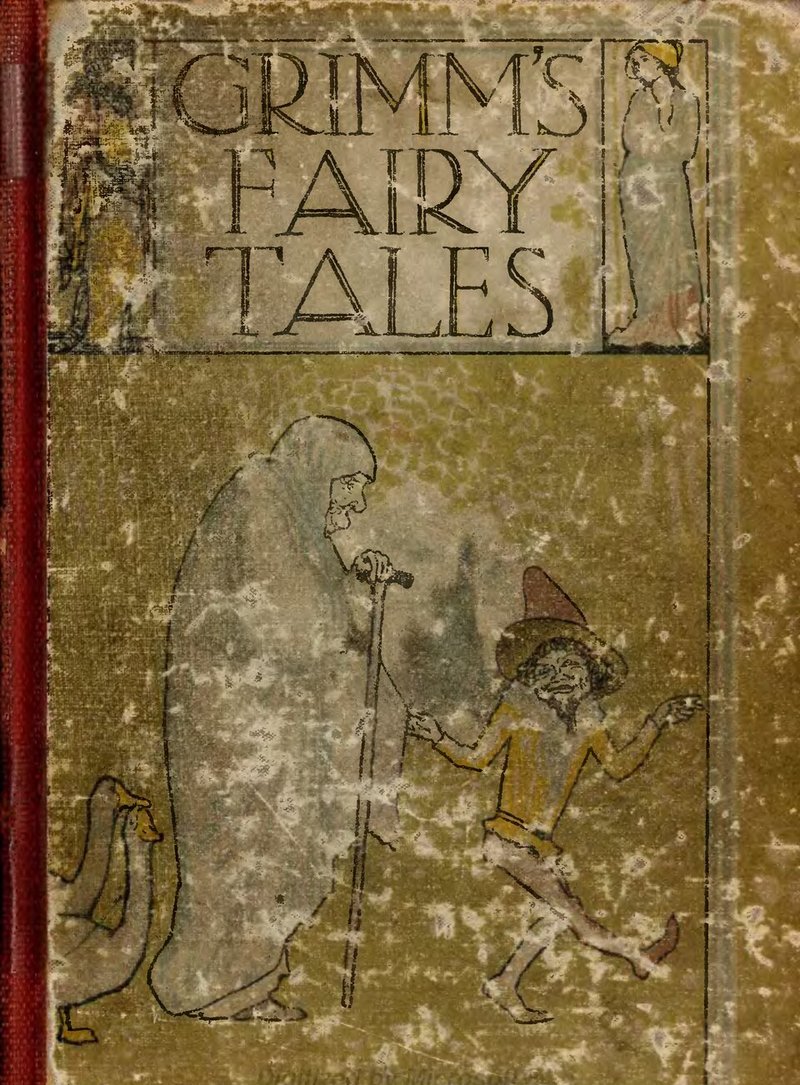
If your family knows these stories from films, the originals will be a surprise. Grimms’
Fairy Tales is the collection two German brothers gathered from storytellers in the
early 1800s, and it is where Snow White, Cinderella, Rapunzel, Hansel and Gretel and
Rumpelstiltskin come from. Our edition has 62 of the tales: deep forests, spinning
wheels, enchanted princes, talking animals and poor woodcutters’ children. Kindness to a
creature on the road is repaid, greed brings about its own end, and the stories move
fast, often with a monster and a wedding inside ten minutes.
What to know
The 62 tales come in the classic nineteenth-century English translations of Edgar Taylor
and Marian Edwardes, with no pictures. Several familiar tales go by their old English
names: “Snowdrop” is Snow White, “Ashputtel” is Cinderella, “Little Red-cap” is Little
Red Riding Hood and “Briar Rose” is Sleeping Beauty. At about 101,000 words the book is
for dipping into, and most tales take five to fifteen minutes aloud. The prose is plain
and quick. Children in grades two to six can read it alone, and it reads aloud from
about age five or six.
The tales are not softened. In “Ashputtel” a stepsister cuts off her great toe to fit
the golden slipper, and the dove points out the blood. In “Little Red-cap” the huntsman
cuts open the sleeping wolf with scissors. In “The Goose-girl” the false bride is
dragged through the streets in a cask stuck round with nails. In “Snowdrop” the wicked
queen “choked with rage, and fell down and died” at the wedding. Each tale stands alone,
so you can read one ahead in a few minutes.
Life when written
Jacob Grimm (1785 to 1863) and Wilhelm Grimm (1786 to 1859) were brothers from Hesse,
scholars of language and old German literature who lived and worked together most of
their lives, mainly in Kassel. They published the first volume of Children’s and
Household Tales in 1812 and the second in 1815, while Germany was still a patchwork of
small states and the Napoleonic Wars were being fought. Many of the tales came from
storytellers they knew, among them Dorothea Viehmann, a tailor’s widow from near Kassel,
and the Wild and Hassenpflug families. Wilhelm married Dortchen Wild, who had told them
several of the tales.
The brothers kept revising the collection for the rest of their lives, and later began
the great German dictionary, the Deutsches Wörterbuch. Edgar Taylor’s English
translation, German Popular Stories, came out in London in 1823 with pictures by George
Cruikshank, and for most English-speaking children it was their first meeting with these
tales.