The pitch
When Mrs. Darling tidies her sleeping children’s minds at night, she keeps coming across
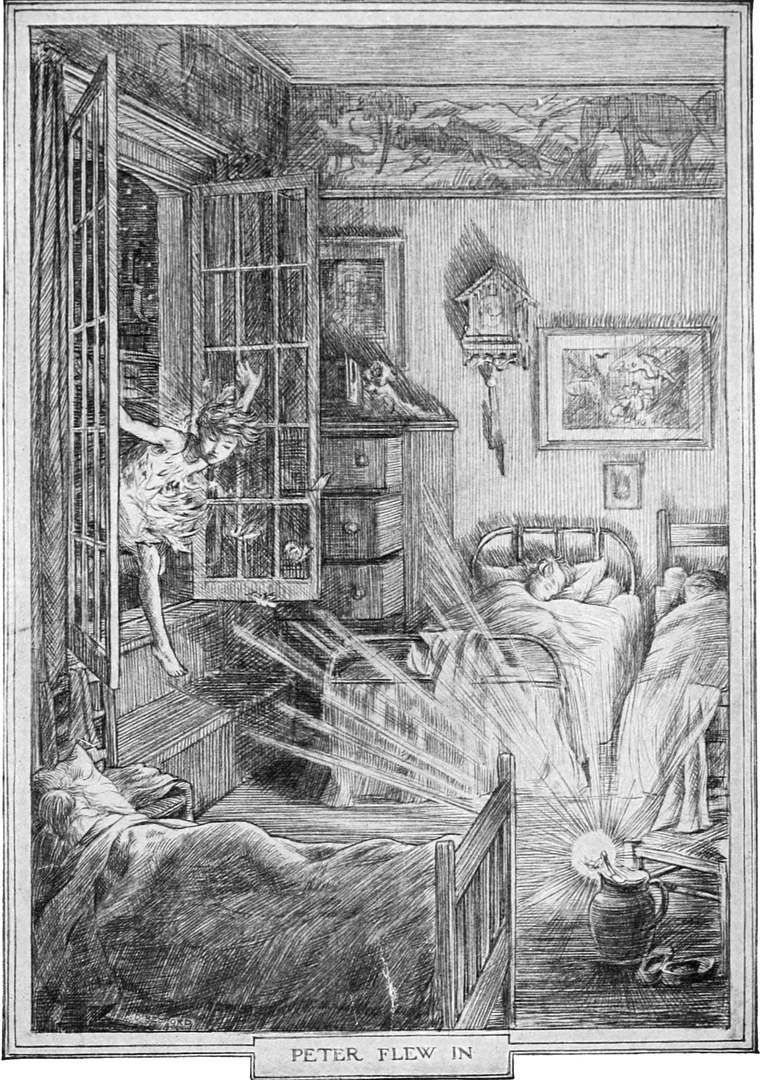
a name she doesn’t know: Peter Pan. One Friday evening, while Nana, the Newfoundland dog
who is their nurse, is chained up in the yard, Peter slips into the nursery to look for
his lost shadow. With a sprinkle of fairy dust from Tinker Bell, he teaches Wendy, John
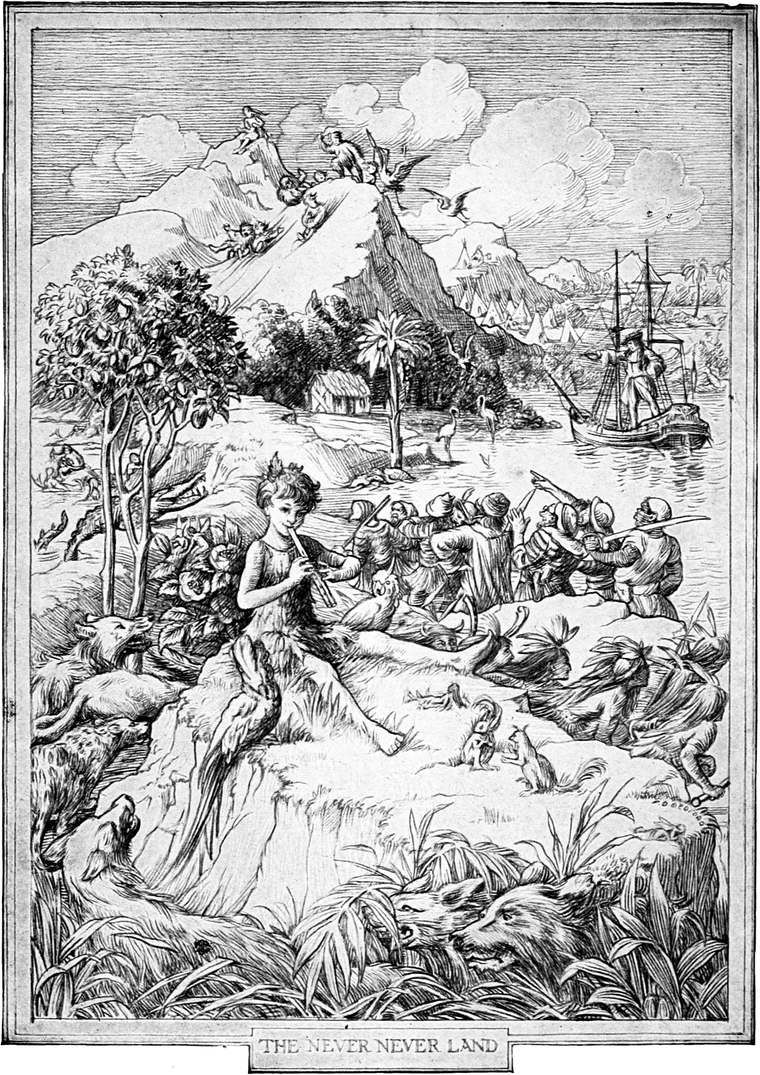
and Michael to fly and takes them away to the Neverland. There Wendy becomes “mother” to
the Lost Boys in their house under the ground, and the children face a jealous fairy,
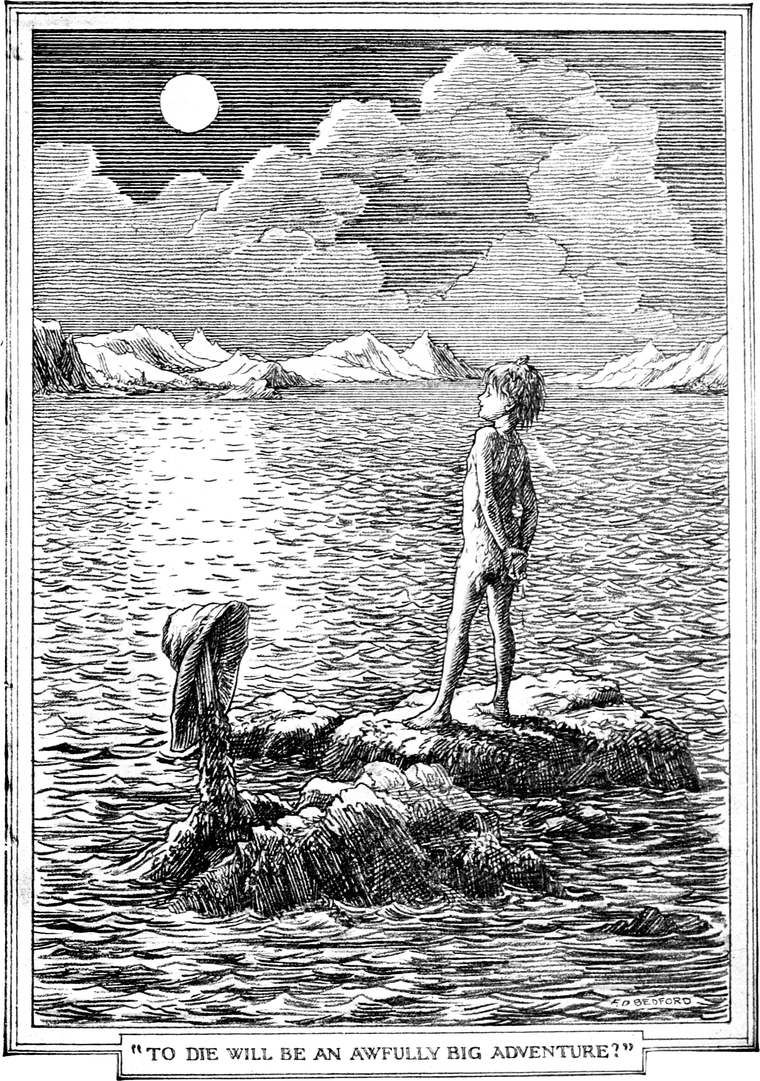
the mermaids’ lagoon, and a last battle with Captain Hook aboard the Jolly Roger.
What to know
At about 47,400 words in 17 chapters, the complete 1911 text (first published as Peter
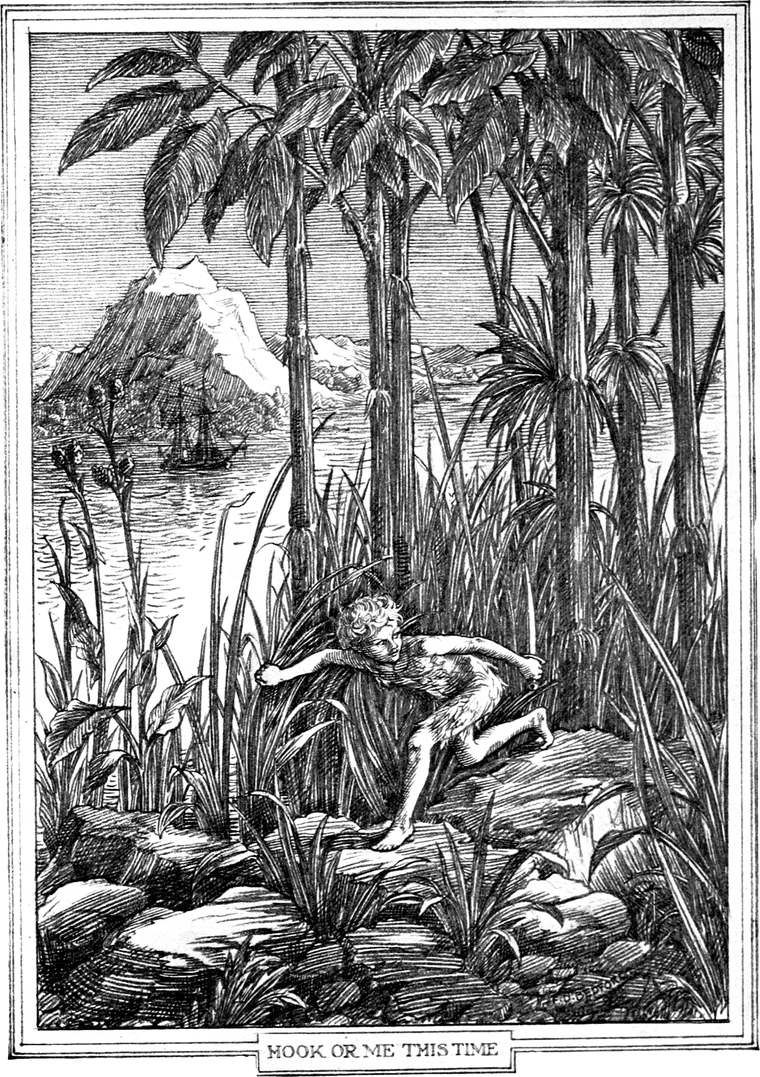
and Wendy) moves quickly, and our edition has F. D. Bedford’s illustrations from the
first edition. Readers in grades 3 to 6 can manage it alone, and it reads aloud well
from about age 6 or 7. Barrie’s narrator talks straight to the reader with a dry,
twinkling wit, and his Edwardian vocabulary (perambulator, embonpoint, cozening) is fun
to untangle together.
The book is franker about danger and death than the films. Hook kills his own men
without a second thought, and in the battles of Chapters 12 and 15 both pirates and
Native Americans are killed. The story also has the prejudices of 1911: its portrayal of
the “Piccaninny” tribe and Tiger Lily is stereotyped, with the period word “redskins”
and broken English.
Life when written
James Matthew Barrie was born in 1860 in Kirriemuir, Scotland, the ninth of ten
children. When he was six, his older brother David died in a skating accident, the day
before his fourteenth birthday. Their mother took comfort in the thought that David
would always be a boy.
In London in the late 1890s, Barrie got to know the Llewelyn Davies boys in Kensington
Gardens and made up stories for them. Peter Pan first appeared in a few chapters of
Barrie’s 1902 novel for adults, The Little White Bird, and then on the London stage on
December 27, 1904, in the play Peter Pan, or the Boy Who Wouldn’t Grow Up. Barrie turned
it into this novel in 1911. In 1929 he gave the rights to Peter Pan to Great Ormond
Street Hospital for Children in London, which still benefits from them today.