01
The map does the hooking
A dead pirate's sea-chest, a black spot, an island with an X on it — the first three chapters are a masterclass in making a kid need to know what happens.
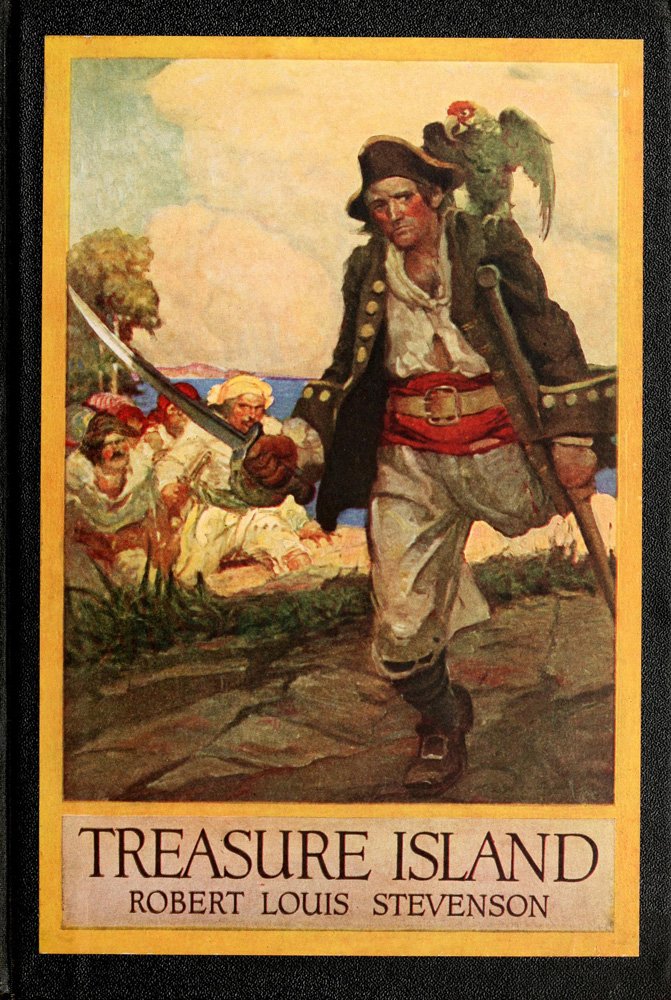
One boy, one map, and the most charming villain ever written — the adventure story all the others descend from.
EPUB works on any device · two-minute setup guide → ·listening, print & film links go to Amazon (affiliate)
A dead pirate's sea-chest, a black spot, an island with an X on it — the first three chapters are a masterclass in making a kid need to know what happens.
The greatest trick in children's literature: the villain is the most likable person aboard. Kids spend the whole book deciding whether to trust him, same as Jim.
Not the grown-ups. A boy overhears the mutiny, steals the ship back, and outfaces killers — competence fantasy at its purest.
An innkeeper’s boy finds a treasure map in a dead pirate’s sea-chest and sails for the island with a crew that is not what it seems. This is the book that invented the pirate story as we know it — X marks the spot, the one-legged man, the parrot — and it still out-adventures everything written since.
The opening chapters at the Admiral Benbow inn grab kids fast, which makes the book an easier sell than its age suggests. Stevenson’s sentences are long and Victorian, though, so it suits confident readers from about grade 5, and Louis Rhead’s illustrations in our edition help pull a reader through. Read the content note: the danger is real, and that frankness is a lot of the appeal.
Stevenson began the book on a rainy Scottish holiday in 1881, painting the island’s map to entertain his twelve-year-old stepson — then wrote the story the map demanded, reading a chapter aloud to the family each night. It ran first as a serial in a boys’ magazine before becoming a book. His Britain was the world’s great seafaring power, but the golden age of piracy was already a hundred and fifty years gone — as legendary to Victorian boys as it is to ours.
Modern books (still in copyright, so not free) that scratch the same itch.
The direct modern descendant — kids, maps, and buried treasure in a fast contemporary series for the same reader.
For the kid whose favorite part was never quite trusting Silver — a hero surrounded by liars, twisting to the last page.
Affiliate links. They never affect our picks.
Prefer a printed copy? Signet Classics paperback (affiliate links). Not sure whether your reader needs the original or an abridged edition? Our guide to choosing →
Send the free EPUB to your Kindle with Amazon's free Send to Kindle — it appears in the library like any book.
Opens straight in Apple Books. Tap the file, choose Books, done — great for bedtime read-alouds.
Google Play Books opens it in a couple of taps, and syncs your place across devices.
Apple Books on a Mac, or the free Calibre app on Windows. No account needed.
We shelve it for grades 5–8 — that's where the language and the length sit for a reader on their own. Read aloud, it works earlier, from about age 8–9 — kids follow a story by ear well before they can read it alone.
The unabridged text measures 1070L Lexile, AR level 8.3 (12 points). (editions measure 850L-1070L.) In everyday terms: grades 5–8, and easier as a read-aloud.
Real peril — people die. Honest pirate violence: men are shot, stabbed, and marooned, and Jim kills in self-defense. Nothing gory, but people die and the deaths count. Rum flows freely.
Yes — the complete, unabridged text, with the original Louis Rhead illustrations. Treasure Island was published in 1883, so it's in the US public domain: sharing it free is legal, and there's no signup or catch. We build the ebook ourselves from the original edition.