The pitch
Bored on a warm riverbank, Alice follows a hurrying White Rabbit down a rabbit-hole and
falls slowly past maps and an empty jar of orange marmalade into Wonderland. Searching
for the key to a lovely garden, she shrinks and grows by turns after a bottle marked
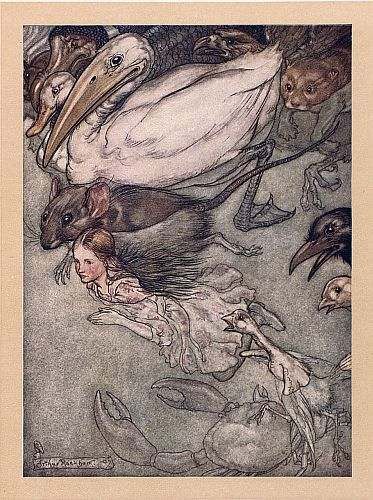
“DRINK ME” and a cake marked “EAT ME.” Along the way she swims in a pool of her own
tears, takes advice from a hookah-smoking Caterpillar, sits through an endless tea-party
with the Hatter and the March Hare, and plays croquet with live hedgehogs for balls and
flamingoes for mallets. It is wilder and wittier than any of the films.
What to know
At about 26,500 words in 12 short chapters, it fits into a week or two of bedtime
reading. It reads aloud well from about age six or seven, if you are willing to give the
Mock Turtle a good sob and the Gryphon a gruff chuckle, and readers in grades three
through seven can manage it on their own. The language is clear and surprisingly modern
for 1865, though you may stop now and then to explain a Victorian detail like a
“caucus-race” or a “treacle-well”.
Nothing in it is frightening, only strange. The Queen of Hearts shouts “Off with his
head!” about once a minute, and the Gryphon tells Alice, “It’s all her fancy, that: they
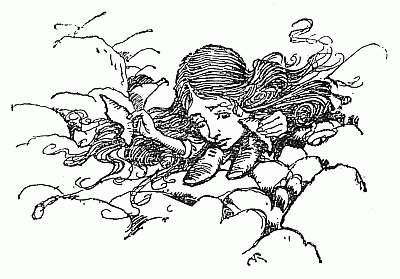
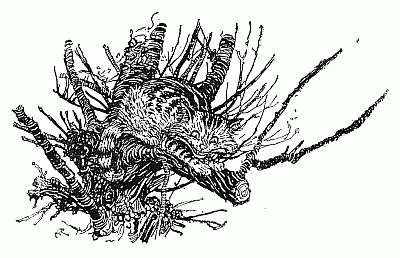
never executes nobody, you know.” Our edition has the complete text with 25 of Arthur
Rackham’s 1907 illustrations in color and black-and-white.
Life when written
Lewis Carroll was the pen name of Charles Lutwidge Dodgson (1832 to 1898), a mathematics
lecturer at Christ Church, Oxford, and one of the keenest early amateur photographers.
On July 4, 1862, he rowed up the Thames from Oxford to Godstow with his friend Robinson
Duckworth and the three young daughters of the Dean of Christ Church: Lorina,
ten-year-old Alice, and Edith Liddell. Carroll’s poem at the front of the book, “All in
the golden afternoon,” remembers the trip:
“Imperious Prima” ordered him to begin, “Secunda” hoped “There will be nonsense in it!”,
and “Tertia” interrupted “Not more than once a minute” while he made up Wonderland on
the water.
Alice asked him to write the story down, and in November 1864 he sent her a handwritten
copy with his own drawings, called Alice’s Adventures Under Ground, as an early
Christmas present. Macmillan published the longer book in 1865 with John Tenniel’s
drawings, after withdrawing the first printing because Tenniel disliked how his pictures
came out. Through the Looking-Glass followed in 1871. When the British copyright ran out
in 1907, a crop of new illustrated editions appeared, and Arthur Rackham’s was one of
them.