The pitch
When a cyclone lifts Dorothy’s gray Kansas farmhouse into the clouds and sets it down in
the Land of Oz, she puts on the Wicked Witch of the East’s silver shoes and sets out
along the road of yellow brick to ask the Great Oz to send her home. Along the way she
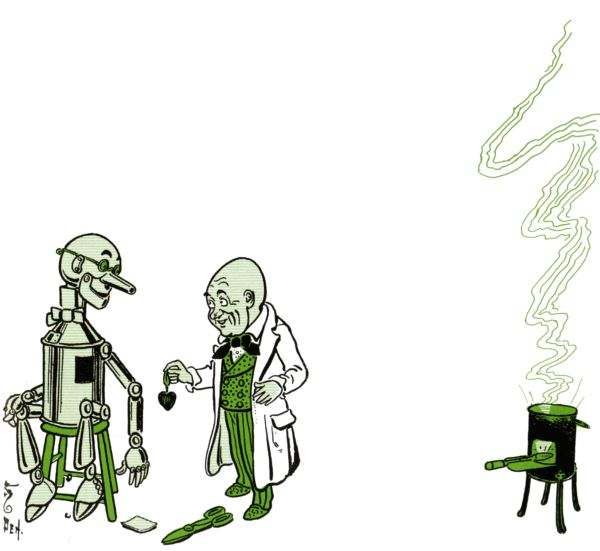
rescues a straw-stuffed Scarecrow, oils a rusted Tin Woodman, and slaps a Cowardly Lion
on the nose for trying to bite Toto. In the book, Oz is no dream. It is a real country
of emerald-tinted spectacles, Winged Monkeys, a humbug balloonist from Omaha, and a long
journey south to Glinda the Good.
What to know
At about 39,600 words in 24 short chapters, The Wonderful Wizard of Oz moves briskly and
reads aloud easily. Readers in grades three through six can manage it on their own, and
children of five or six can follow a chapter or two at bedtime: Baum’s sentences are
plain and his dialogue is lively.
Nothing lingers, but there is more violence than in the film. The Tin Woodman’s own
story (Chapter 5) has an enchanted axe cutting off his limbs one by one. He cuts off a
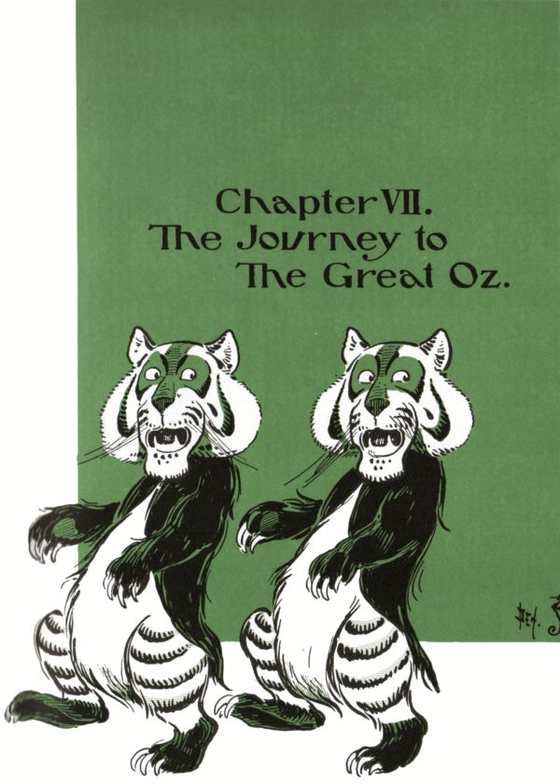
wildcat’s head (Chapter 9), and two bear-bodied, tiger-headed Kalidahs fall to their
deaths in a gulf (Chapter 7). In Chapter 12 the Wicked Witch of the West sends wolves,
crows and bees against the travelers: the Tin Woodman cuts off the heads of forty
wolves, and the Scarecrow wrings the necks of forty crows. Then Dorothy melts the Witch
with a bucket of water.
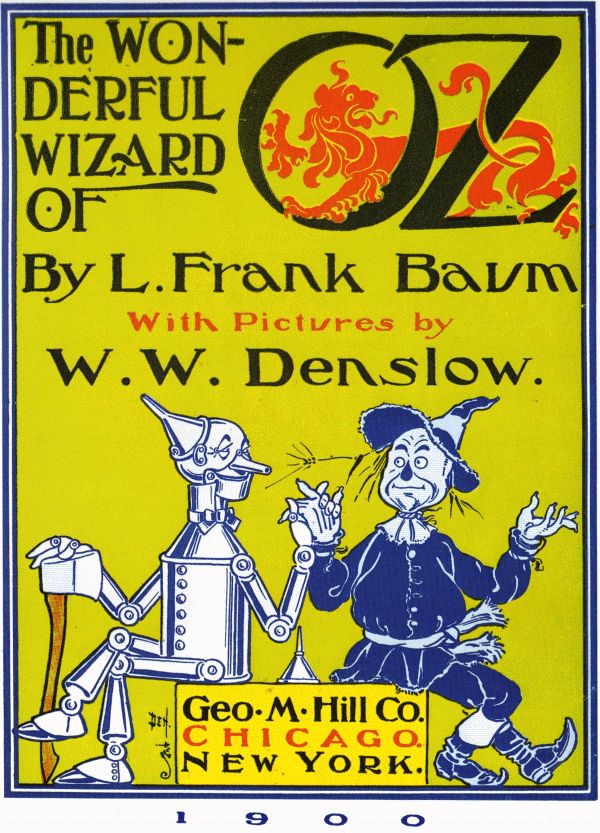
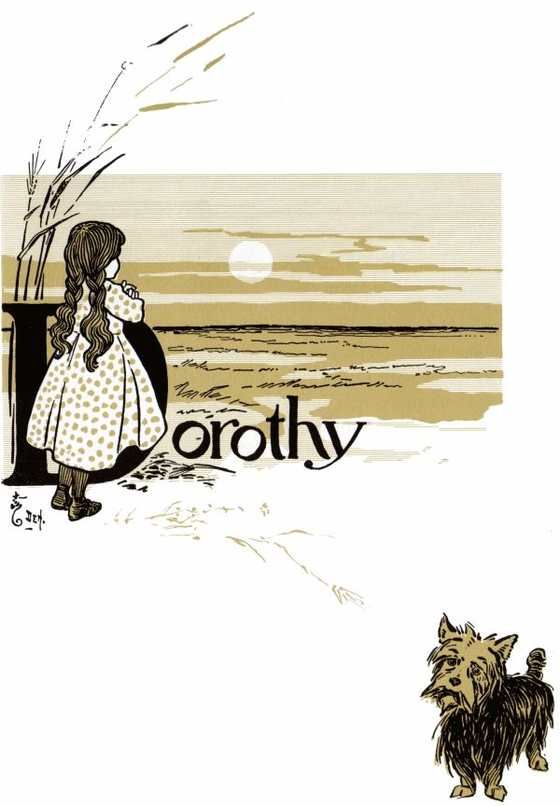
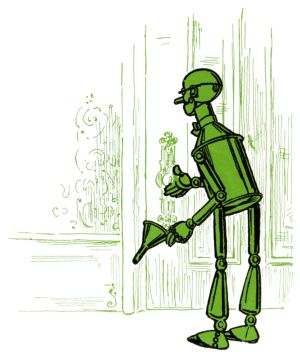
Our edition has the complete 1900 text with 143 of W. W. Denslow’s illustrations from
the first edition, about half of them in color.
Life when written
L. Frank Baum was born in 1856 in Chittenango, New York, and tried a good many things
before Oz. From 1888 to 1891 he lived in Aberdeen, South Dakota, where his variety
store, Baum’s Bazaar, failed and he then ran a weekly newspaper. In 1891 the family
moved to Chicago, where he worked as a newspaper reporter and a traveling salesman
selling china, and in 1897 he started The Show Window, a magazine for shop-window
decorators. He and his wife Maud, a daughter of the suffragist Matilda Joslyn Gage, had
four sons, and he made up stories for them.
In 1899 he and the illustrator W. W. Denslow published Father Goose: His Book, the
bestselling children’s book of that year. The Wonderful Wizard of Oz followed in 1900
from the George M. Hill Company in Chicago, with Denslow’s pictures printed in color on
its pages and the copyright shared between the two men. A stage musical opened in
Chicago in 1902 and ran on Broadway the next year. Baum wrote thirteen more Oz books;
the last, Glinda of Oz, came out in 1920, the year after he died.