The Dog and the Hare.
A Hound, having started a Hare on the hill-side, pursued her for some distance, at one time biting her with his teeth as if he would take her life, and at another time fawning upon her, as if in play with another dog. The Hare said to him: "I wish you would act sincerely by me, and show yourself in your true colors. If you are a friend, why do you bite me so hard? If an enemy, why do you fawn on me?"
They are no friends whom you know not whether to trust or to distrust.
The Fawn and his Mother.
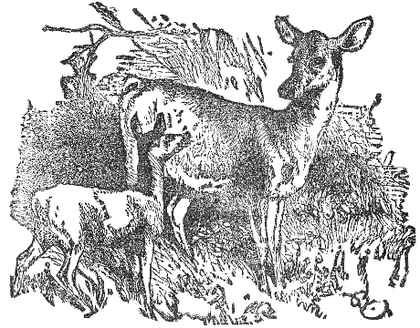
A young Fawn once said to his mother: "You are larger than a dog, and swifter, and more used to running; why, then, O Mother! are you always in such a terrible fright of the hounds?" She smiled, and said: "I know full well, my son, that all you say is true. I have the advantages you mention, but yet when I hear the bark of a single dog I feel ready to faint."
No arguments will give courage to the coward.
The Lark and her Young Ones.
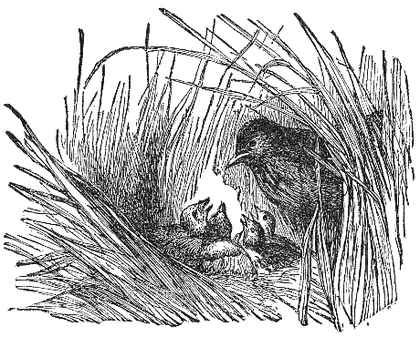
A Lark had made her nest in the young green wheat. The brood had almost grown, when the owner of the field, overlooking his crop, said: "I must send to all my neighbors to help me with my harvest." One of the young Larks heard him, and asked his mother to what place they should move for safety. "There is no occasion to move yet, my son," she replied. The owner of the field came a few days later, and said: "I will come myself to-morrow, and will get in the harvest." Then the Lark said to her brood: "It is time now to be off—he no longer trusts to his friends, but will reap the field himself."
Self-help is the best help.
The Bowman and the Lion.
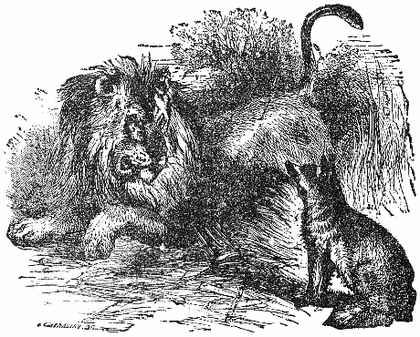
A very skillful Bowman went to the mountains in search of game. All the beasts of the forest fled at his approach. The Lion alone challenged him to combat. The Bowman immediately let fly an arrow; and said to the Lion: "I send thee my messenger, that from him thou mayest learn what I myself shall be when I assail thee." The Lion, thus wounded, rushed, away in great fear, and on a Fox exhorting him to be of good courage, and not to run away at the first attack, he replied: "You counsel me in vain, for if he sends so fearful a messenger, how shall I abide the attack of the man himself?"
A man who can strike from a distance is no pleasant neighbor.
The Boy and the Filberts.
A Boy put his hand into a pitcher full of filberts. He grasped as many as he could possibly hold, but when he endeavored to pull out his hand, he was prevented from doing so by the neck of the pitcher, which was much smaller than his closed hand. Unwilling to lose his filberts, and yet unable to withdraw his hand, he burst into tears, and bitterly lamented his disappointment. A bystander said to him: "Be satisfied with half the quantity, and you will readily draw out your hand."
Do not attempt too much at once.
The Woman and her Hen.
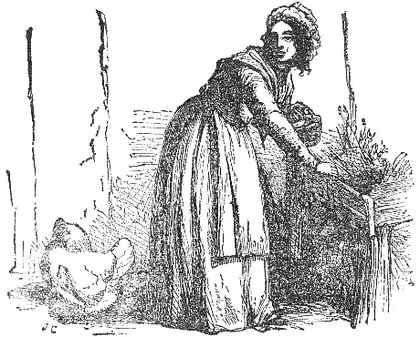
A Woman possessed a Hen that gave her an egg every day. She often thought with herself how she might obtain two eggs daily instead of one, and at last, to gain her purpose, determined to give the Hen a double allowance of barley. From that day the Hen became fat and sleek, and never once laid another egg.
Covetousness overreacheth itself.
The Lamb and the Wolf.
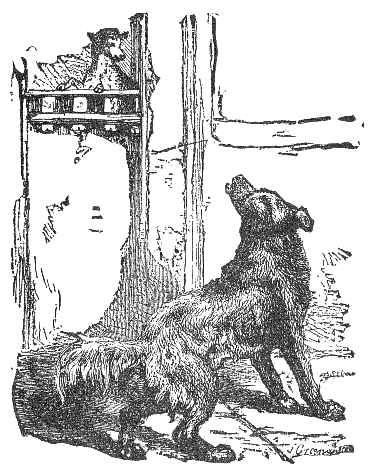
A Wolf pursued a Lamb, which fled for refuge to a certain temple. The Wolf called out to him and said: "The priest will slay you in sacrifice, if he should catch you;" on which the Lamb replied: "It would be better for me to be sacrificed in the temple, than to be eaten by you."
It is safer to be among friends than enemies.
The Bear and the Gardener.
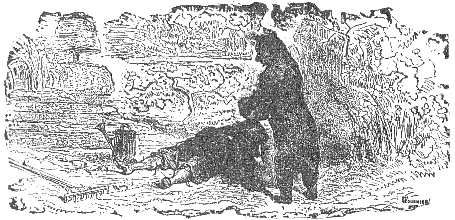
A Gardener, who lived alone, became discontented, and set out, one day, to seek a friend who would be a suitable companion. He had not gone far when he met a Bear, whom he invited to come and live with him. The Bear was a very silly one, who was also discontented with living alone, so he went home with the Gardener very willingly. The Gardener provided all the food, and the only service he required of the Bear was to keep the flies off his face while he slept in the shade. One day, a fly insisted upon lighting on the Gardener's face, although he was brushed off again and again. The silly Bear finally became so enraged that he threw a heavy stone upon it. He killed the fly, but, alas! he also killed his friend.
Better have no friend at all than a foolish one.
The Heifer and the Ox.
A Heifer saw an Ox hard at work harnessed to a plough, and tormented him with reflections on his unhappy fate in being compelled to labor. Shortly afterward, at the harvest home, the owner released the Ox from his yoke, but bound the Heifer with cords, and led her away to the altar to be slain in honor of the festival. The Ox saw what was being done, and said to the Heifer: "For this you were allowed to live in idleness, because you were presently to be sacrificed."
The lives of the idle can best be spared.
The Eagle and the Fox.
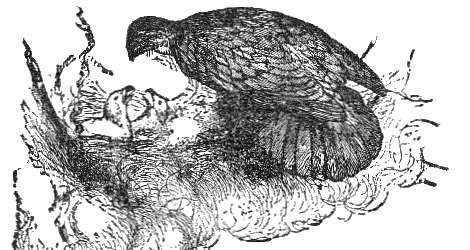
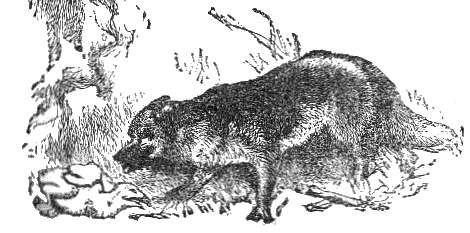
An Eagle and a Fox formed an intimate friendship, and decided to live near each other. The Eagle built her nest in a tall tree, while the Fox crept into the underwood and there produced her young. Not long after, when the Fox was ranging for food, the Eagle, being in want of provision for her young ones, swooped down and seized upon one of the little cubs, and feasted herself and brood. The Fox on her return, discovering what had happened, was less grieved for the death of her young than for her inability to avenge them. A just retribution, however, quickly fell upon the Eagle. While hovering near an altar, on which some villagers were sacrificing a goat, she suddenly seized a piece of flesh, and carried with it to her nest a burning cinder. A strong breeze soon fanned the spark into a flame, and the eaglets, as yet unfledged and helpless, were roasted in their nest and dropped down dead at the bottom of the tree. The Fox gobbled them up in the sight of the Eagle.
The tyrant is never safe from those whom he oppresses.
The Hawk and the Nightingale.
A Nightingale, sitting aloft upon an oak, was seen by a Hawk, who made a swoop down, and seized him. The Nightingale earnestly besought the Hawk to let him go, saying that he was not big enough to satisfy the hunger of a Hawk, who ought to pursue the larger birds. The Hawk said: "I should indeed have lost my senses if I should let go food ready to my hand, for the sake of pursuing birds which are not yet even within sight."
A bird in the hand is worth two in the bush.