The pitch
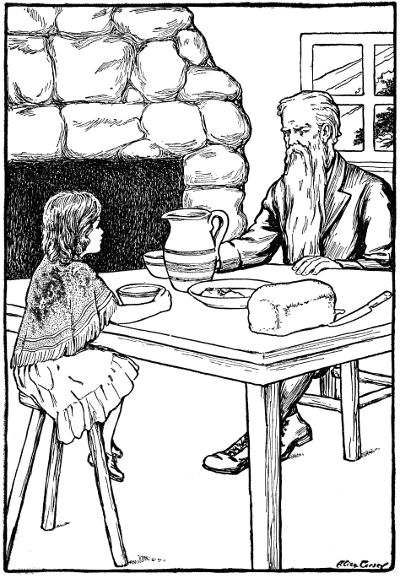
Heidi is an orphan, and her aunt takes her up the mountain and leaves her with her
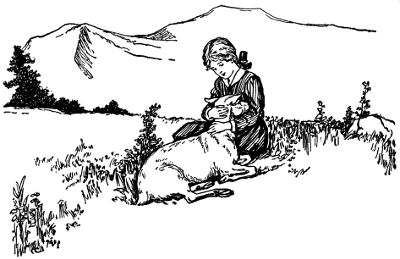
gruff, solitary grandfather. There she thrives: running about with Peter the goatherd,
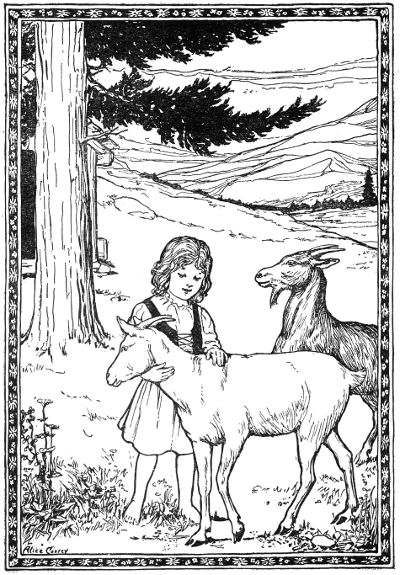
getting to know the goats Little Swan and Little Bear, and visiting Peter’s blind
grandmother. Then her aunt comes back and takes her to Frankfurt to be a companion for
Clara, a lonely rich girl who cannot walk. Heidi and Clara become fast friends, but
Heidi grows pale and thin with homesickness until she is sent back to the mountain. In
the end Clara comes to visit, and the mountain changes things for both of them.
What to know
At about 66,400 words in 23 chapters, Heidi moves along easily. It reads aloud well from
about age six or seven, and readers in grades three through six can manage it on their
own. This 1916 translation is plain and warm, with short sentences and plenty of lively
dialogue.
Nothing in it is frightening. The saddest stretches are Heidi’s homesickness in
Frankfurt, where she grows thin and walks in her sleep, and the cold, poor cottage where
Peter’s blind grandmother lives until Heidi and her grandfather begin to help. The book
is openly religious in the old Swiss way (prayers answered, faith rewarded), and it
treats Clara’s disability with the attitudes of 1881: kindly, but as something to be
cured.
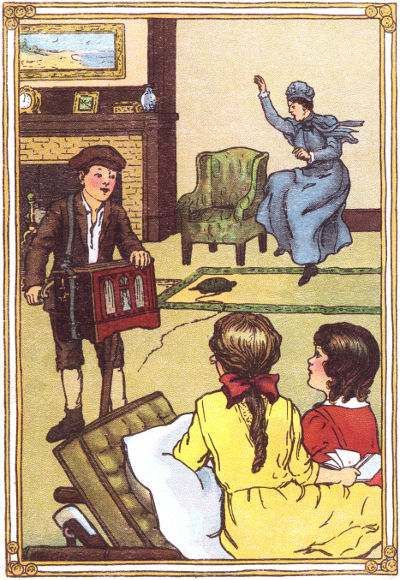
Our edition is the complete story in all 23 chapters, from the 1916 English translation
published by Whitman Publishing Co., with 30 of Alice Carsey’s pictures in color and
black-and-white. The book doesn’t name its translator.
Life when written
Johanna Spyri was born Johanna Heusser in 1827 in Hirzel, a village above Lake Zurich in
Switzerland. Her father was a country doctor, and her mother wrote religious poems and
hymns. In 1852 she married Bernhard Spyri, a lawyer, and moved to the city of Zurich,
where their only child, a son, was born in 1855. She knew the mountain country around
Maienfeld, where the book is set, from visits there.
Heidi came out in Germany in two parts, in 1880 and 1881, and the first part appeared in
English, without a translator’s name, in 1882. In 1884 both her husband and her son
died. Spyri went on writing stories for children until her own death in Zurich in 1901.