HomeAll booksThe Princess and the Goblin
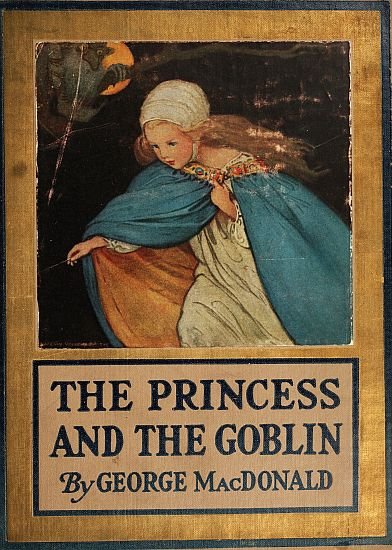
The Princess and the Goblin cover
Fantasy · Adventure

The Princess and the Goblin

George MacDonald · first published 1872

The 1872 fairy tale Tolkien and Lewis learned goblins from — a small brave princess, a miner boy who sings the dark back, and an invisible thread that leads toward the danger to get you out of it.

Free EPUB & KindleGrades 3–6Original Jessie Willcox Smith (the 1920 David McKay edition — eight colour plates with their printed legends) art
Worth knowing ⓘ
Worth knowing: The goblin prince — the one the goblins mean Irene to marry — is named Harelip, a Victorian term for cleft lip used here as a grotesque name; it appears through chapters 18–28. The goblins' two schemes, overheard by Curdie in chapters 8–9, are to carry the princess into the mountain as a bride for their prince and, failing that, to flood the mines and drown the miners. Curdie spends chapters 18–20 walled up as a prisoner in the goblin caves, and in chapter 25 the king's men-at-arms shoot him with a crossbow bolt in the dark, mistaking him for a goblin creature; he lies feverish from the wound. He kills one goblin housepet with his pocket knife after it bites him (chapter 23); the rest of the fighting is stamping on goblin feet and singing, closer to slapstick than battle. In the final chapters the goblins' own flood sweeps back through their halls and they are found drowned; Irene shudders at it. Irene's mother is dead, told only sideways — her father gives her her mother's ring, and the book says Irene did not remember her.

EPUB works on any device · two-minute setup guide → ·listening, print & film links go to Amazon (affiliate)

Why your kid will love it

01

Two rescuers, and nobody waits

Irene follows her grandmother's thread straight into the goblin mountain and digs Curdie out of a cave with her own hands, stone by stone; a few chapters later he storms a palace for her. Kids notice that the princess does as much rescuing as the miner boy — the book got there in 1872.

02

Monsters with a rule

The goblins are strong, clever, and nearly unbeatable — except that their feet are soft, and they cannot bear singing. So Curdie walks into the mountain armed with a pickaxe and rhymes he makes up on the spot, stamping and versifying his way out of trouble. A monster with one findable weakness is exactly the kind kids want to fight.

03

The thread you have to trust

The grandmother's gift is a thread too fine to see. You can't look ahead to where it goes; you can only keep your finger on it — and the night Irene needs it most, it leads her into the mountain instead of away. Whether to keep hold when the path feels backwards is a real question, and the book lets an eight-year-old carry it.

Reading it together?

Warm-ups, real questions, and something to do together. No worksheets.Book club questions →

The background for parents

The pitch

Princess Irene lives in a great half-castle on a mountainside, and the mountain is hollow: under her floors a whole goblin kingdom digs and schemes, driven underground generations ago and nursing its grudge. Above her, up a stair that is not always there, an impossibly old grandmother spins thread by lamplight and gives Irene one end of it. Between the two worlds stands Curdie, a twelve-year-old miner who works the night shift with a pickaxe and keeps the goblins off by making up rude songs — and when the goblins finally move, princess and miner boy take turns pulling each other out of the dark. It is the book that invented the goblins every later fantasy borrowed, and it still reads like a bedtime story told by someone who loved the teller’s job.

What to know

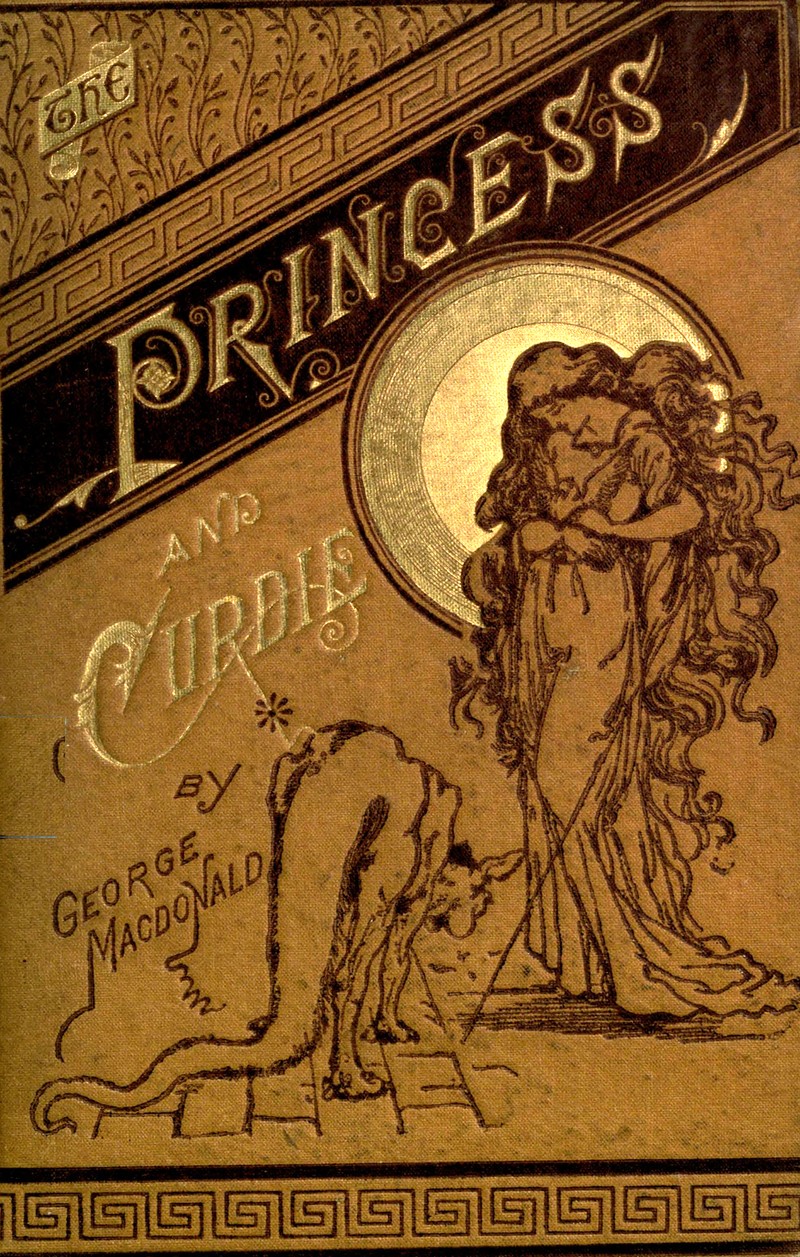
The grade 3–6 band is for reading it alone: the sentences are Victorian and take a practiced reader (Accelerated Reader measures the full text at 6.1), but the chapters are short, the plot is clean, and it was written to be read aloud — a six-year-old listener can ride it easily, and the goblin-baiting rhymes beg to be performed. Our edition is the complete 1872 text in the 1920 David McKay printing, with all eight of Jessie Willcox Smith’s colour plates and their printed legends, and the edition’s own pictorial cover. The scares are brief and mostly comic — the content note locates every one, along with the goblin prince’s dated name — and the book’s deaths happen to goblins, offstage of its warmest rooms. There is a sequel, The Princess and Curdie, written eleven years later and darker in key; this book ends complete on its own.

Life when written

MacDonald wrote it in London around 1870, serialising it in Good Words for the Young, the children’s magazine he was then editing, before it became a book in 1872. He was a Scot from Aberdeenshire, a former minister who had lost his pulpit young and kept a household of eleven children on writing, editing, and lecturing — the storyteller arguing with a child on the first page is a man who did his drafting aloud at bedtime. The family’s friends included Lewis Carroll, and it was the MacDonald children’s delight in the manuscript of Alice’s Adventures Under Ground that helped persuade Carroll to publish it. Mining was the industrial fact of Victorian Britain — every reader knew that real boys Curdie’s age had worked underground within living memory — and MacDonald set his fairy kingdom not in a far-off land but directly beneath the nursery floor.
Part of a series

The Princess and the Goblin is book 1 of 2 — MacDonald wrote two books about Princess Irene and the miner boy Curdie, eleven years apart — a fairy tale and then its strange, darker sequel. Most families only ever hear of the first.All 2 books in order →

The book vs. the movie

The 1991 animation was the first animated feature ever made in Wales — and it renamed the goblin prince, softened the goblins, and gave Curdie a showdown the book deliberately refuses.How they differ →

If they like it, read these next

Modern books (still in copyright, so not free) that scratch the same itch.

The Hobbit by J. R. R. Tolkien

Tolkien said outright that his goblins owed 'a good deal' to MacDonald's — all except the soft feet, which he never believed in. For the kid who loved Curdie underground: the same tunnels, sixty years deeper.

Lewis called MacDonald his master and never concealed the debt. A kid who felt the pull of the grandmother's tower — a magic that asks to be trusted before it explains itself — is ready for the wardrobe door.

Affiliate links. They never affect our picks.

Prefer a printed copy? Puffin Classics paperback, with an introduction by Ursula K. Le Guin (affiliate links). Not sure whether your reader needs the original or an abridged edition? Our guide to choosing →

Read it on any device

Quick answers

What age is The Princess and the Goblin right for?

We shelve it for grades 3–6 — that's where the language and the length sit for a reader on their own. Read aloud, it works earlier, from about age 6–7 — kids follow a story by ear well before they can read it alone.

What reading level is The Princess and the Goblin?

The unabridged text measures 1030L Lexile, AR level 6.1 (8 points). (for the full text — Lexile's own database, TeachingBooks, and SuperSummary agree; the AR quiz's 50,949-word count matches the unabridged novel.) In everyday terms: grades 3–6, and easier as a read-aloud.

Is The Princess and the Goblin scary?

Mild — goblins menace more than they manage. The goblin prince — the one the goblins mean Irene to marry — is named Harelip, a Victorian term for cleft lip used here as a grotesque name; it appears through chapters 18–28. The goblins' two schemes, overheard by Curdie in chapters 8–9, are to carry the princess into the mountain as a bride for their prince and, failing that, to flood the mines and drown the miners. Curdie spends chapters 18–20 walled up as a prisoner in the goblin caves, and in chapter 25 the king's men-at-arms shoot him with a crossbow bolt in the dark, mistaking him for a goblin creature; he lies feverish from the wound. He kills one goblin housepet with his pocket knife after it bites him (chapter 23); the rest of the fighting is stamping on goblin feet and singing, closer to slapstick than battle. In the final chapters the goblins' own flood sweeps back through their halls and they are found drowned; Irene shudders at it. Irene's mother is dead, told only sideways — her father gives her her mother's ring, and the book says Irene did not remember her.

Is the free ebook really the whole book?

Yes — the complete, unabridged text, with the original Jessie Willcox Smith (the 1920 David McKay edition — eight colour plates with their printed legends) illustrations. The Princess and the Goblin was published in 1872, so it's in the US public domain: sharing it free is legal, and there's no signup or catch. We build the ebook ourselves from the original edition.

More free classics like this