The pitch
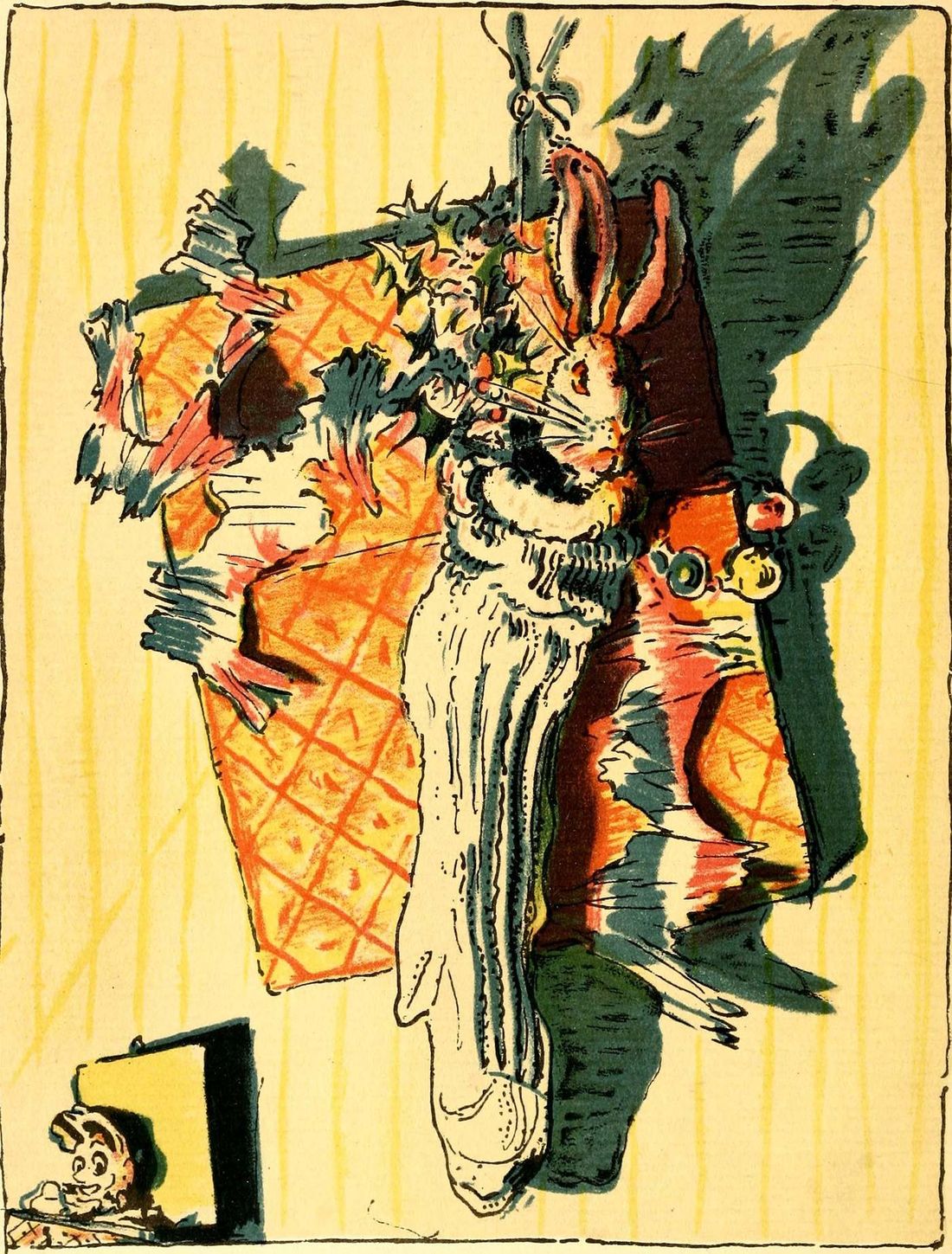
A velveteen rabbit arrives in a boy’s Christmas stocking, is forgotten by dinnertime and
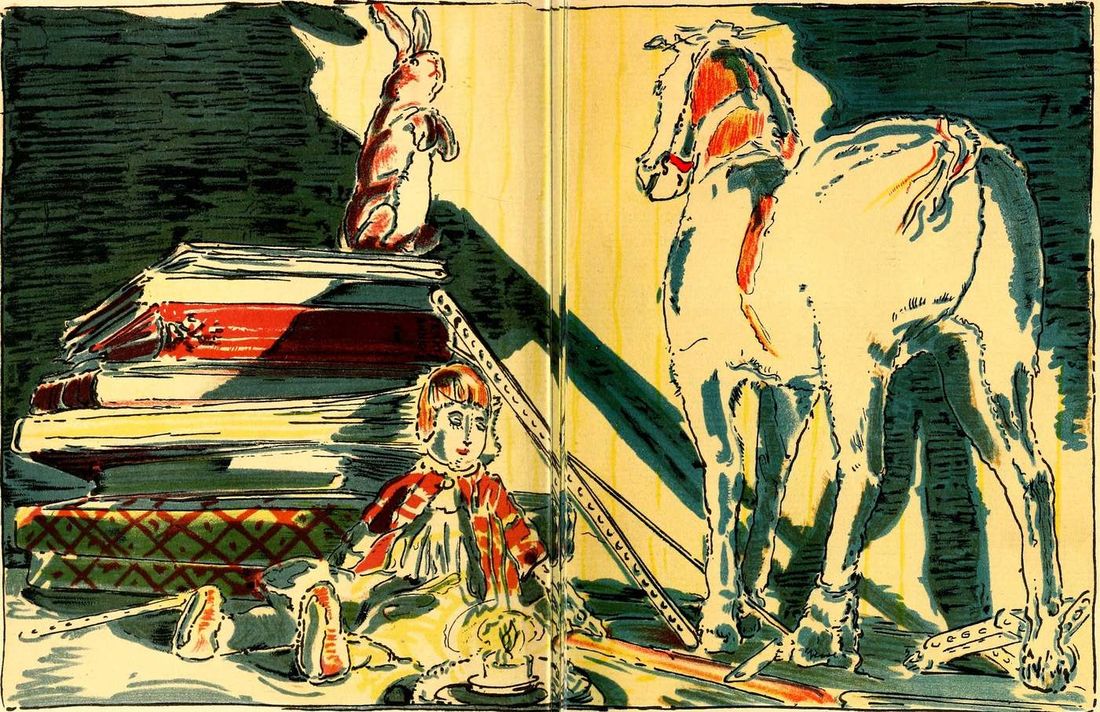
spends a long time in the toy cupboard, snubbed by the mechanical toys. The only one who
is kind to him is the Skin Horse, who explains how a toy becomes Real: a child has to
love it for a long, long time. Then one night Nana gives the Boy the old Bunny to sleep
with, and the Boy loves him through a spring and a summer until his fur is worn and his
whiskers are gone. The story is short and quiet, with a sad night near the end and a
happy morning after it.
What to know
At about 3,900 words, the book takes around twenty-five minutes to read aloud, so it
fits one bedtime, or two short ones with a break after the summer in the wood. It reads
aloud well from about age four or five, and children in grades two to five can read it
alone. Williams’s sentences are long but plain, with a few old words (sateen, bracken,
fender, brigands) that are easy to explain as you go.
The sad part comes near the end. The Boy has scarlet fever, and after he recovers the
doctor orders his books and toys burnt, the Rabbit with them. The Rabbit spends a night
in a sack behind the fowl-house, cries a real tear, and is rescued by the nursery magic
Fairy, who makes him a real rabbit. He is never burned, and the Boy sees him again the
next spring without knowing it.
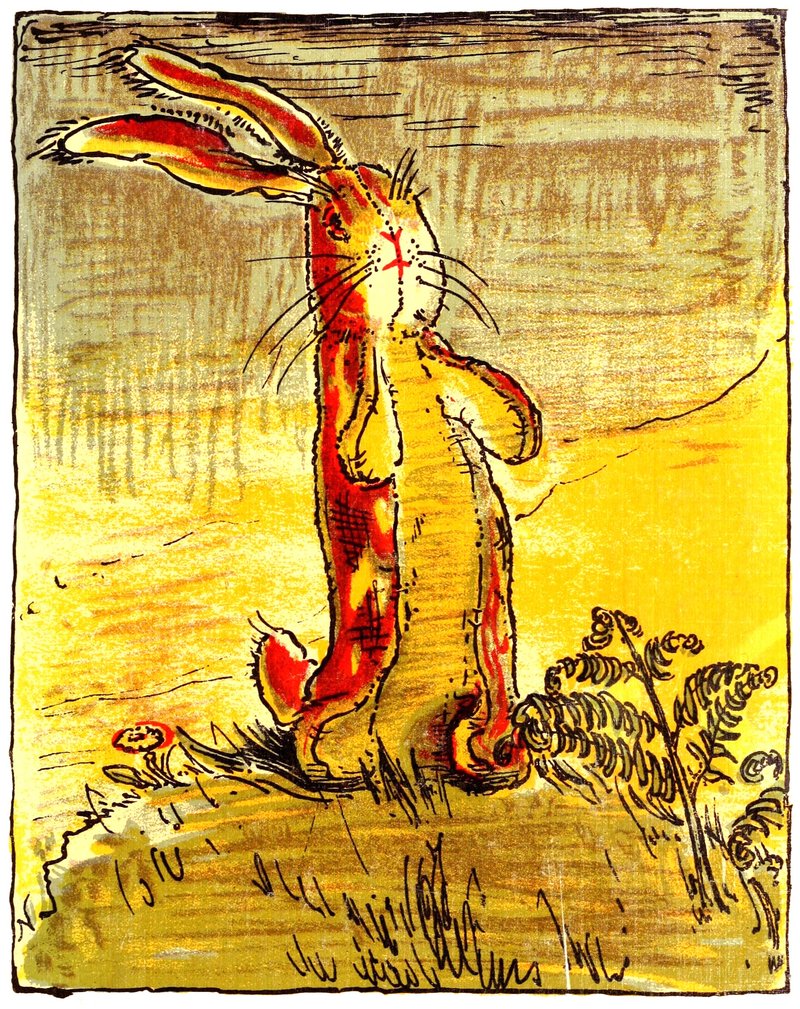
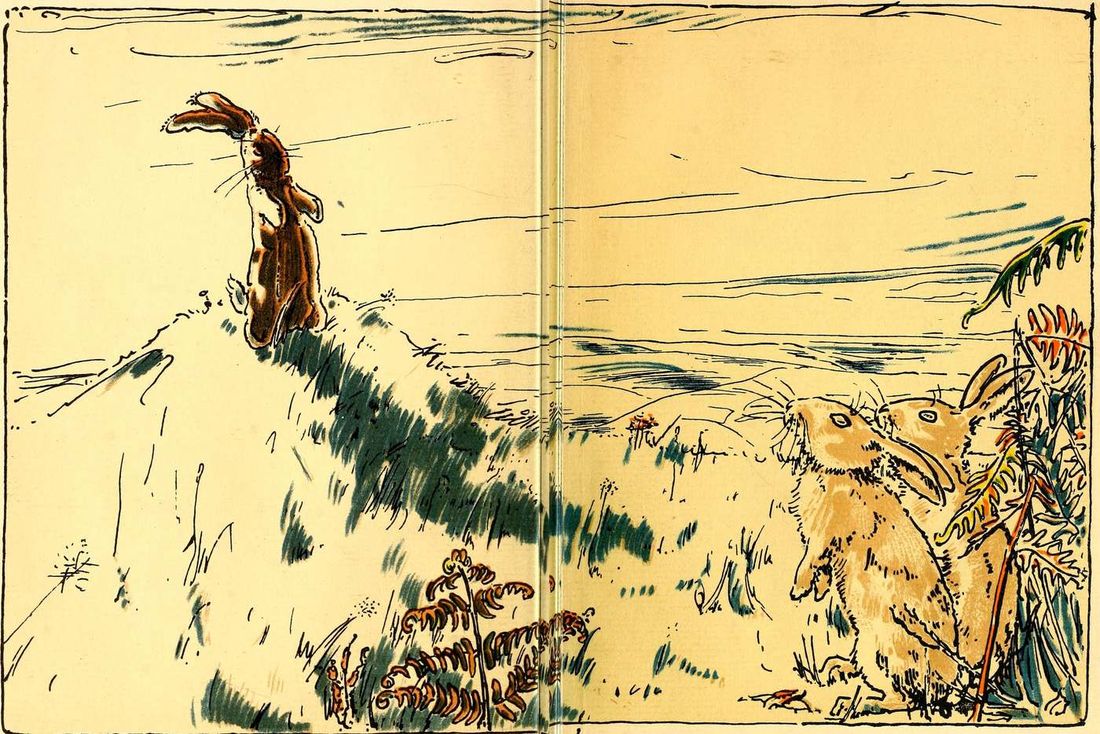
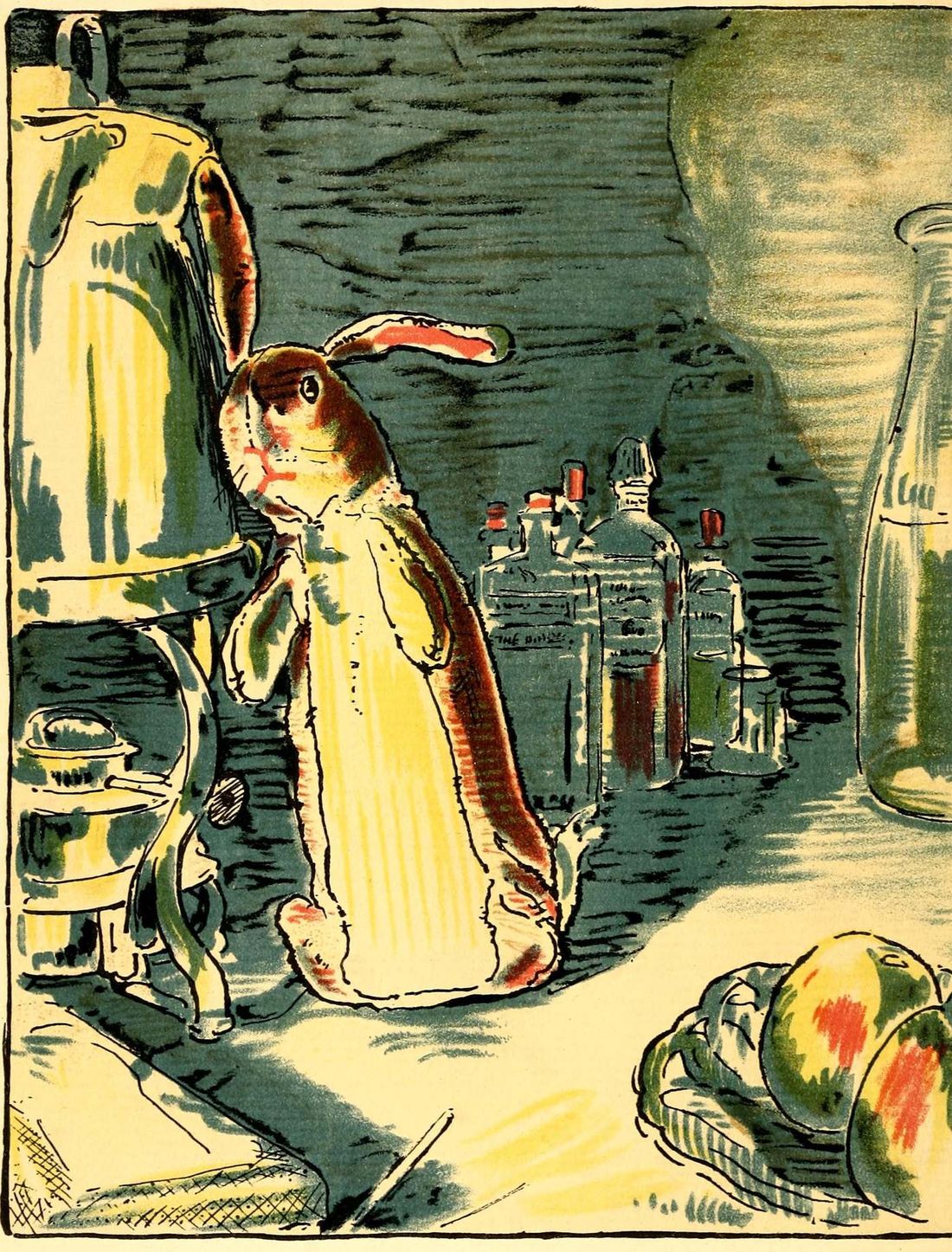
Our edition has William Nicholson’s seven colour plates from the 1922 first edition,
taken from a high-resolution library scan, with the three two-page spreads shown whole.
Life when written
Margery Williams was born in London in 1881. Her father, Robert Williams, was a barrister
and a classical scholar, and he died suddenly when she was seven. In 1890 the family
moved to the United States, and from the next year she grew up in a farming community
in rural Pennsylvania. She went back to London to publish her first novel, a book for
adults, in 1902.
In 1904 she married Francesco Bianco, an Italian who managed a book department at her
publisher’s. They lived in Paris and then in Turin, Italy, where their daughter Pamela
became known as a child painter, with an exhibition of her work at eleven. Francesco
joined the Italian army in 1914. In 1921 the family moved to New York and settled in
Greenwich Village.
The Velveteen Rabbit was Williams’s first book for children. It was published in 1922
by George H. Doran in New York and William Heinemann in London, with pictures by William
Nicholson, a British painter and printmaker who later wrote and drew his own picture
books, Clever Bill and The Pirate Twins. Williams went on to write many more children’s
books, and Winterbound was a runner-up for the Newbery Medal in 1937. She died in New
York in 1944.